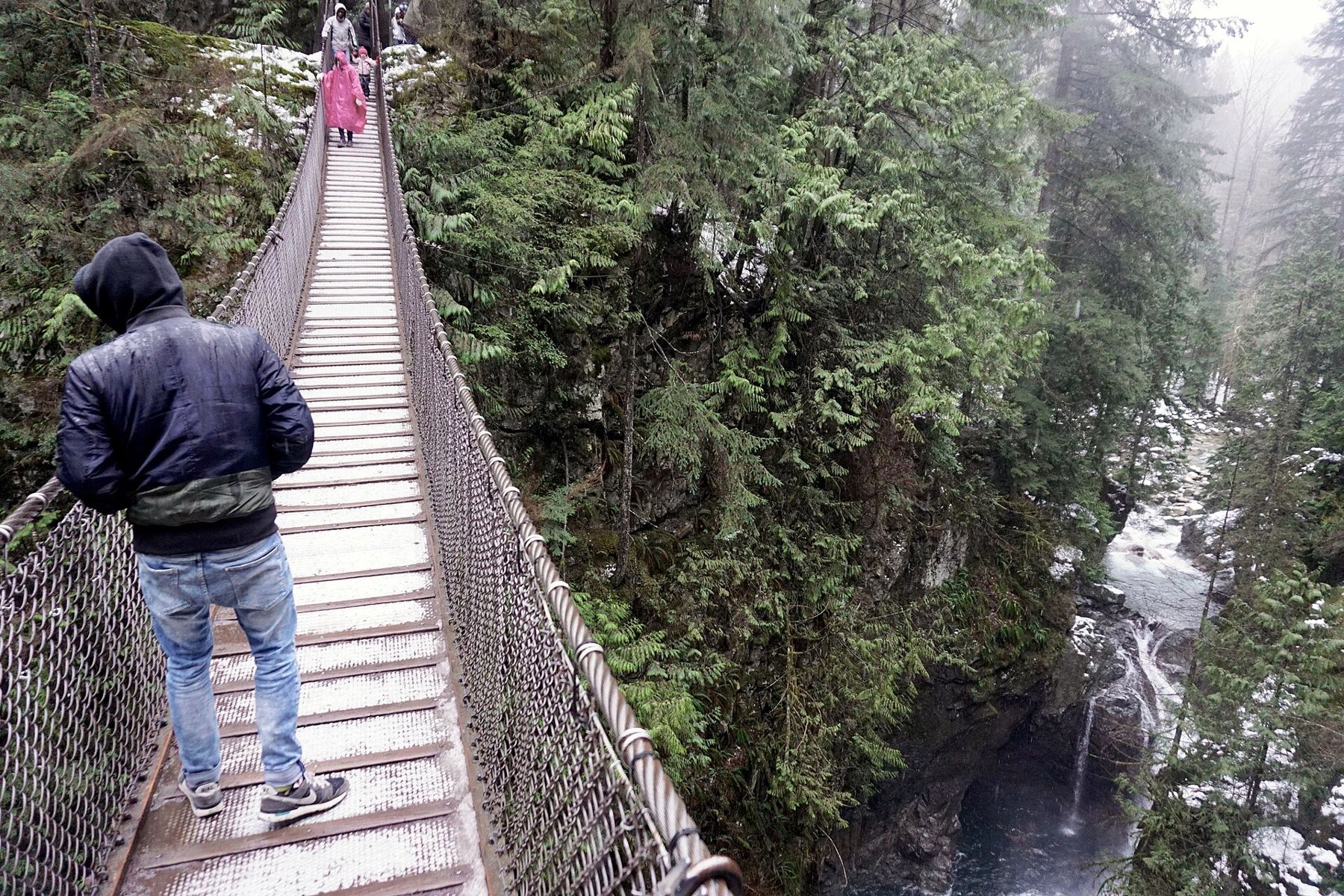
The bridge
Lynn Canyon Park sits in a steep, forested valley in the District of North Vancouver, where Lynn Creek has cut a narrow canyon through the rock. The park's suspension bridge first opened in 1912 and hangs about fifty metres above the creek. Unlike the better-known paid bridge elsewhere on the North Shore, crossing this one is free.
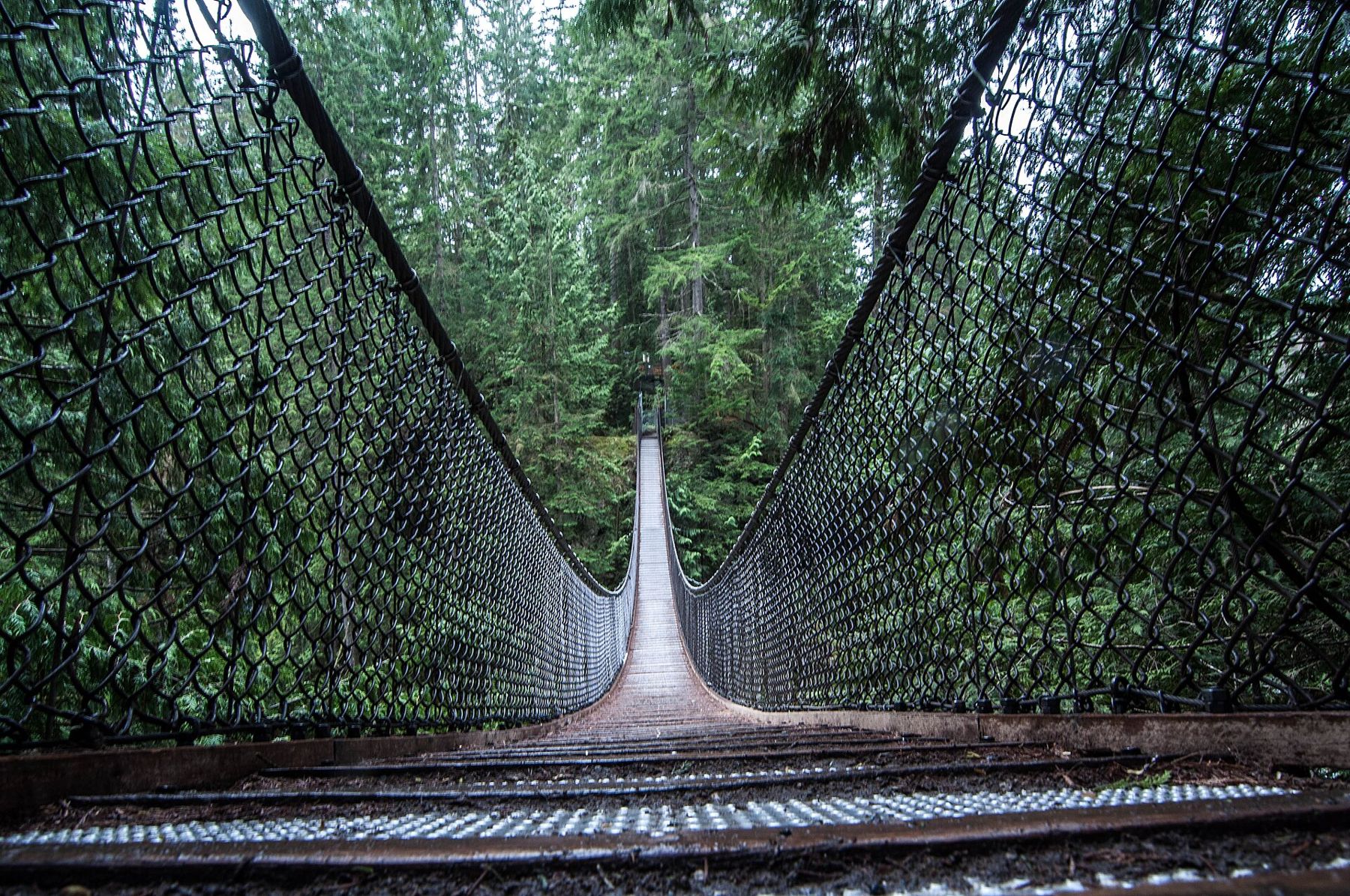
The bridge is narrow and bounces as people walk. Groups crossing in step can make it sway noticeably, which is part of the fun for some and unnerving for others. Hold the cables, keep moving and step aside at the ends if you want to stop for photos. On busy summer days you may wait a few minutes to start across.
From the middle, you look straight down into the canyon: green pools, white water, boulders and the dark walls of rock rising toward the trees. In heavy rain the creek runs high and loud below you.
The bridge was built when the North Shore was still mostly forest and logging camps, and a trip here was a day out for people from the young city across the harbour. The park around it grew over the following decades and is now run by the District of North Vancouver. Long before any of that, this valley and the creek running down to Burrard Inlet were part of the lands of the Tsleil-Waututh and Squamish peoples, who still live on the North Shore today.
The bridge is open year-round during park hours, but it can close for storms, maintenance or heavy snow. If it is closed, the trails on the near side are often still open, so the trip is rarely wasted.
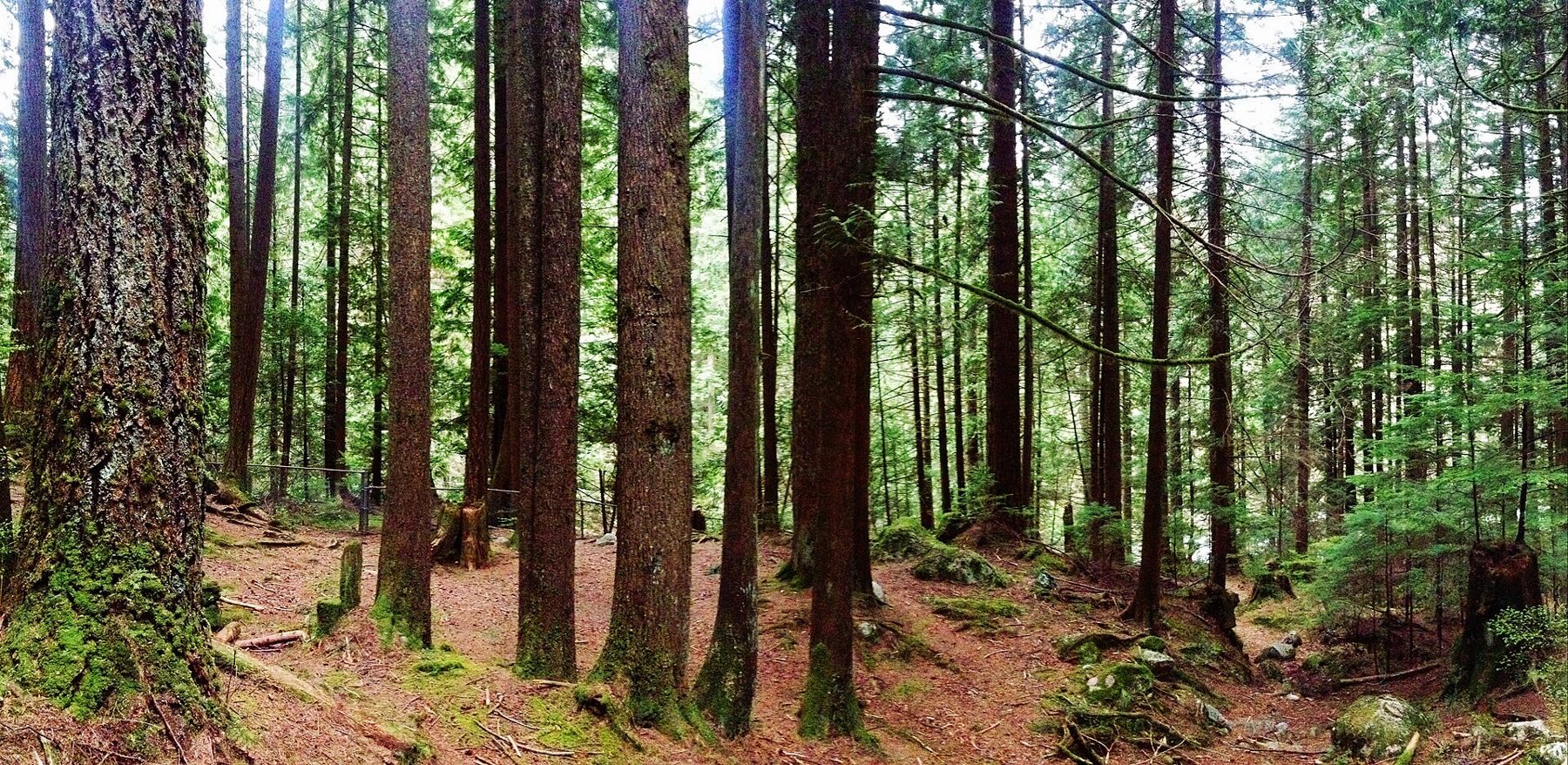
Into the rainforest
The park is a stretch of temperate rainforest: tall Douglas fir, western red cedar and hemlock, with ferns, moss and old stumps from early logging. Many of the giant trees here were cut in the late 1800s and early 1900s, and you can still see springboard notches on some old stumps, where loggers stood to saw.
A popular loop crosses the suspension bridge, follows trails and stairs along the canyon on the far side to a second, lower bridge at Twin Falls, and returns on the other bank. It takes about an hour at a gentle pace. The Baden-Powell Trail, a long route across the North Shore mountains, also passes through the park, so you can extend your walk in either direction if you have a map and time.
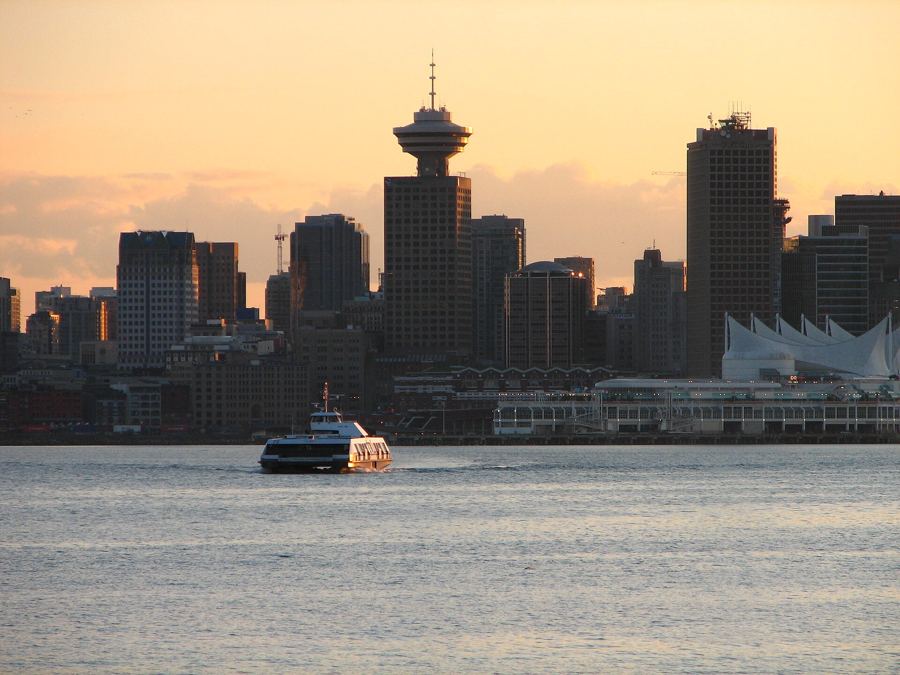 Same afternoon?The SeaBus and Lonsdale Quay
The pools
Below the bridge, the creek widens into a series of pools. The best known is a broad pool a short walk along the creek from the bridge, where people wade and swim on hot summer days. The water is clear and very cold, even in August, because it comes from snowmelt and mountain streams.
If you visit in summer and want to get in, choose a calm, shallow edge, enter slowly, and keep children within arm's reach. Never jump from rocks or cliffs, never swim near falls or fast water, and never go in after heavy rain, when the creek can rise quickly and the current becomes dangerous.
Safety on the rocks
This is the part of the guide to read twice. Lynn Canyon looks gentle from the bridge, but the canyon walls, the slippery rock and the cold, deep water have caused many serious injuries and deaths over the years, most often to people jumping from cliffs or climbing off the trail. Signs and fences mark the dangerous areas; respect them.
- Stay on marked trails and behind railings.
- Wet rock, roots and mossy stairs are slippery in all seasons. Wear shoes with real grip.
- Cold water shocks the body. Even strong swimmers can get into trouble quickly.
- Water levels can change fast after rain, including rain higher in the mountains.
Wet days and dry days
Lynn Canyon is a true both-weathers place. In autumn and winter rain the forest is at its most dramatic: dripping cedars, mist hanging in the canyon and the creek roaring. The trails are muddy in places but well built, with boardwalks and stairs in the steepest sections. Bring a waterproof jacket rather than an umbrella, which is awkward on the narrow bridge.
In summer, the canyon is shady and several degrees cooler than the city, which makes it a welcome escape on hot days. It is also much busier. Arrive early on weekends, and expect the area around the bridge and the main pool to be crowded by midday.
The park's ecology centre near the entrance has displays on the forest and the animals that live in it, and is a good dry spot with children. A small cafe near the entrance offers drinks and snacks.
Reaching North Vancouver
By transit, take the SeaBus to Lonsdale Quay and a bus up toward Lynn Valley, then walk the last stretch through a residential neighbourhood to the park entrance; the guide to SkyTrain and buses covers fares and tapping. The SeaBus and Lonsdale Quay guide has more about the crossing itself.
If the canyon leaves you wanting more of the North Shore, the views from Grouse Mountain are close by on a clear day, and Deep Cove and Quarry Rock make another good half-day hike.
Top picture by kallerna