A museum on Musqueam land
The Museum of Anthropology stands near the western tip of Point Grey, on the campus of the University of British Columbia. The university sits on the traditional, ancestral and unceded territory of the Musqueam people, whose community lies close by near the mouth of the Fraser River. That context matters here more than at most museums. Many of the objects in the collection were made by Indigenous peoples of the Northwest Coast, and some left their communities during the decades when ceremonies such as the potlatch were banned under Canadian law.
The museum today works with First Nations communities on how their belongings are shown and described, and in some cases on returning them. Many labels give the names of makers and their nations, and some note that a type of object is still used in ceremony today. Take time to read them. The galleries are not only about the past; many of the artists represented are working now, and the carving traditions on show are very much alive.
A few habits help you visit well. Notice that some labels speak of belongings rather than objects, and treat the poles as the work of named families and nations rather than as generic decoration. Some objects carry crests and histories that belong to particular families, and their stories are not always told in full on a label; that is deliberate. If a sign asks you not to photograph something, put the camera away. Staff in the galleries can answer questions, and when the museum offers talks or guided walks, they are the best way to hear more about how the collection came together and how that history is being addressed.
It also helps to know a little about the land around you. The Musqueam have lived in the Fraser River estuary for thousands of years, and their language, hən̓q̓əmin̓əm̓, appears on signs across the campus. Look for it on the way in.
The Great Hall
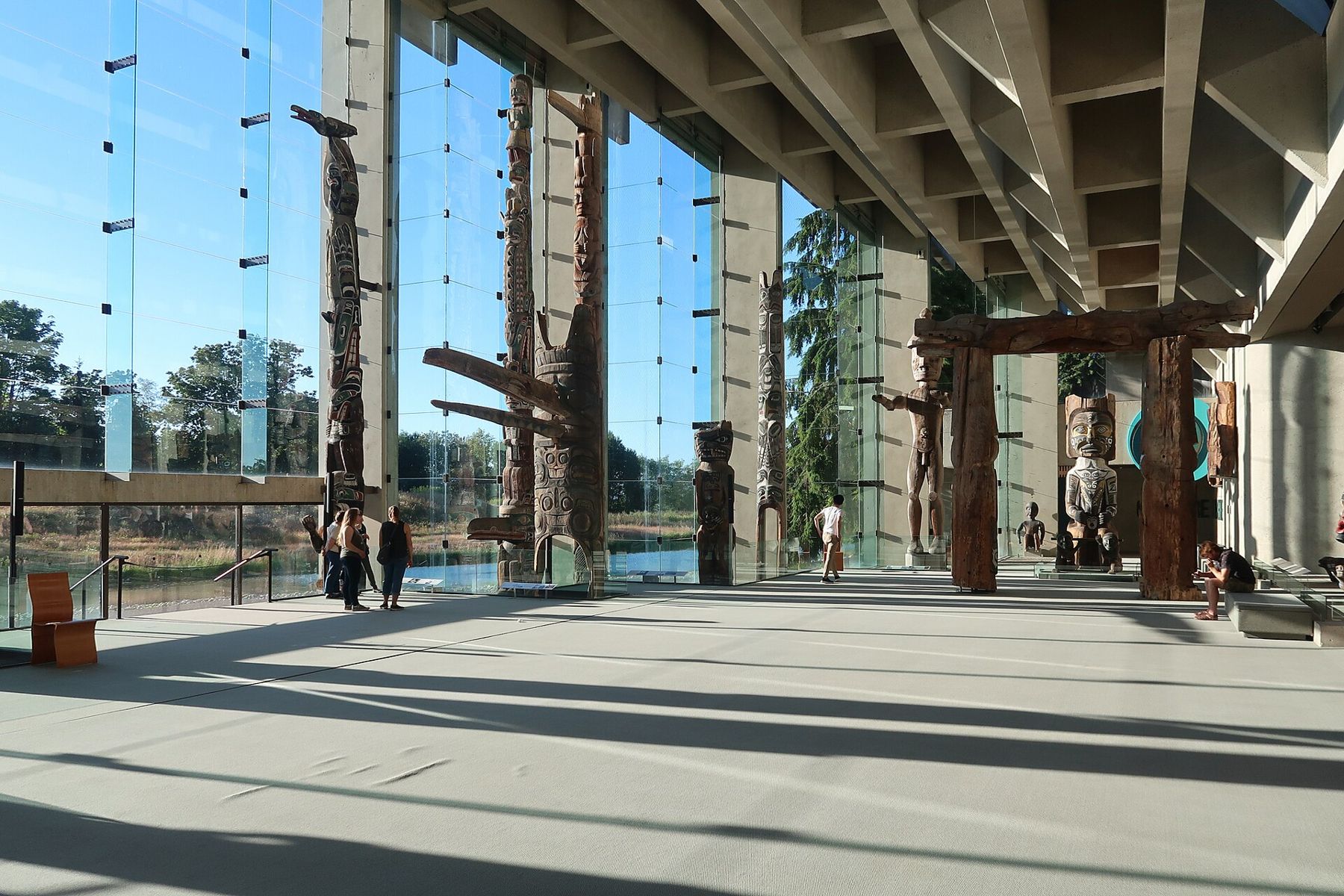
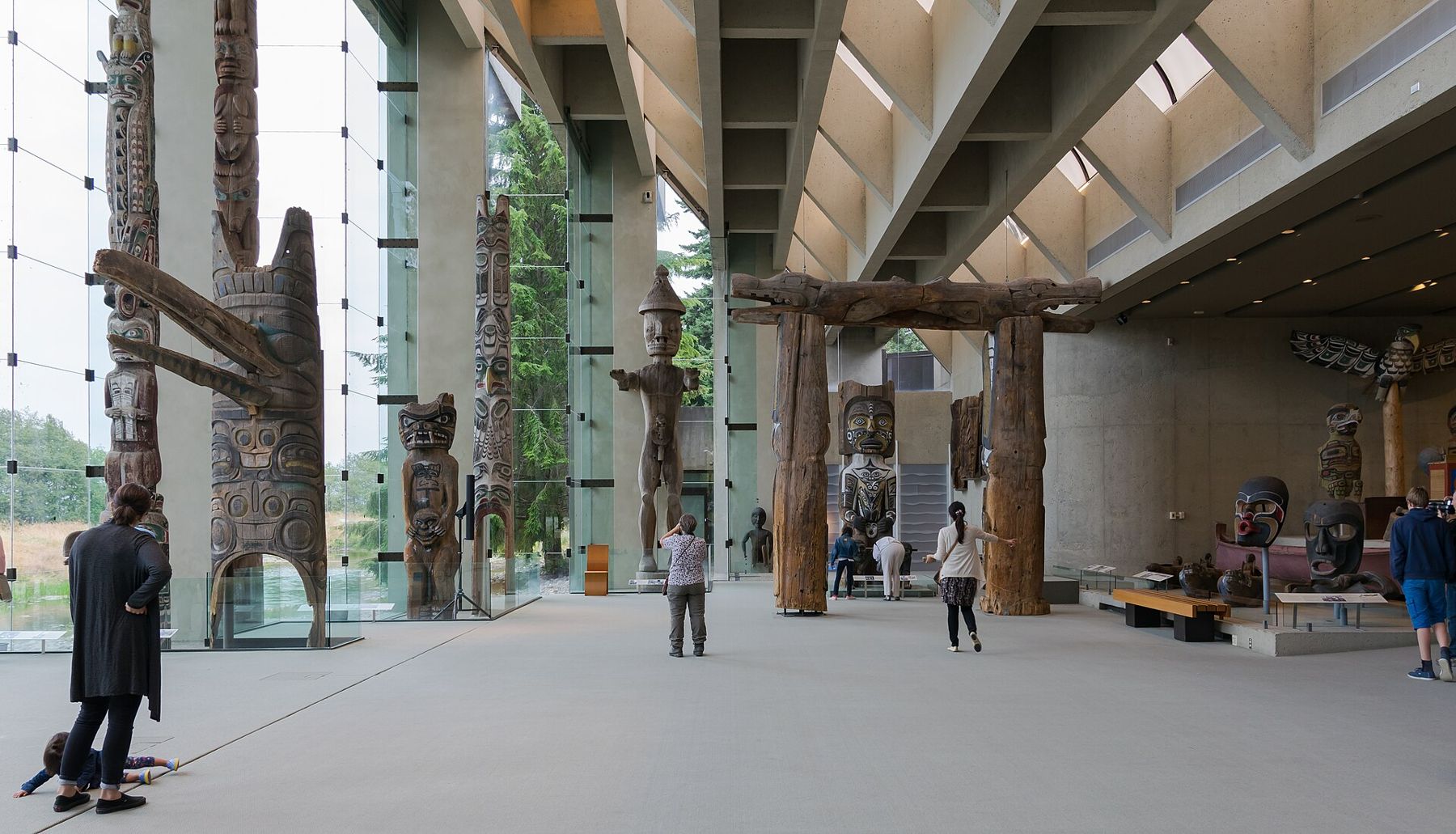
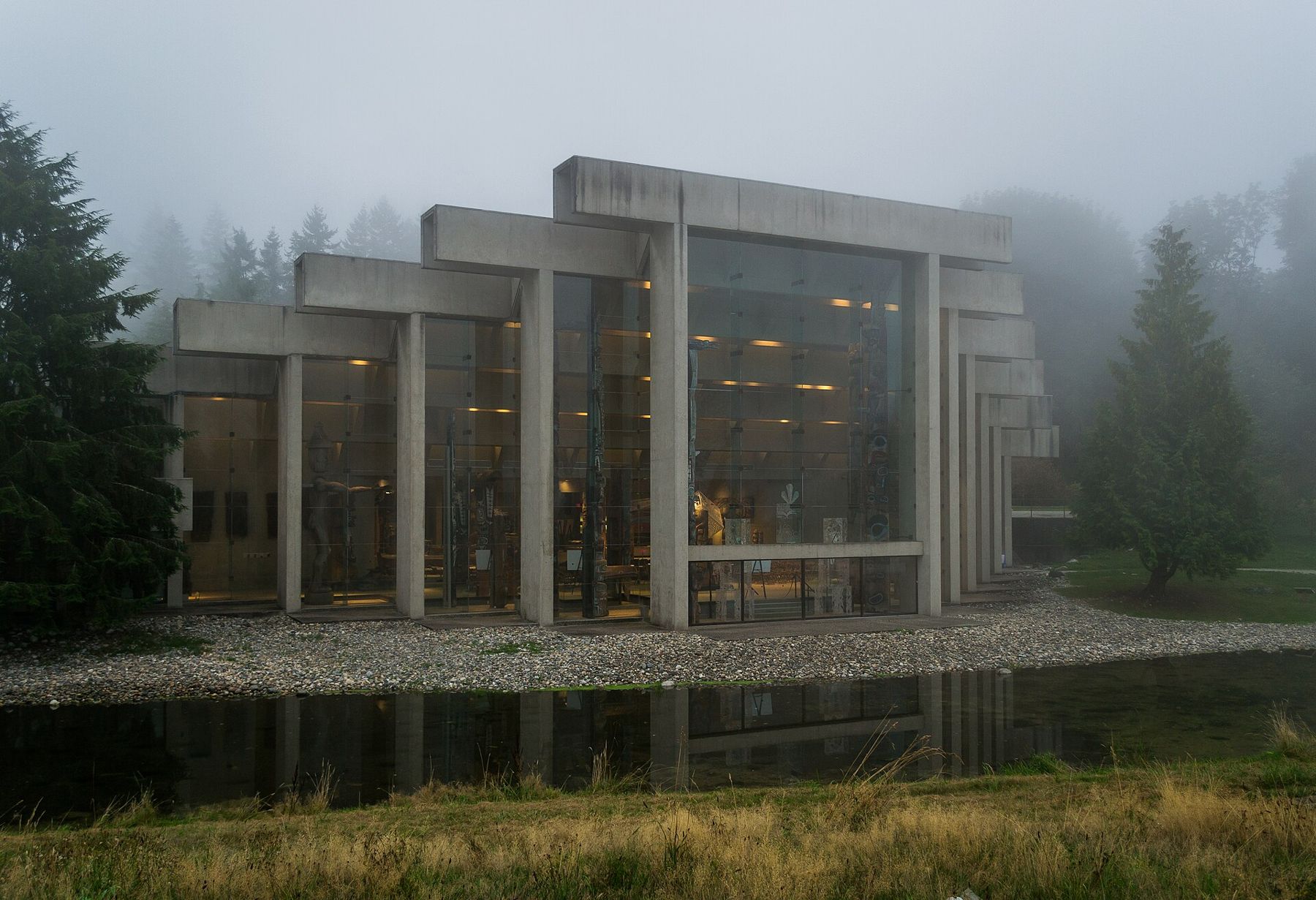
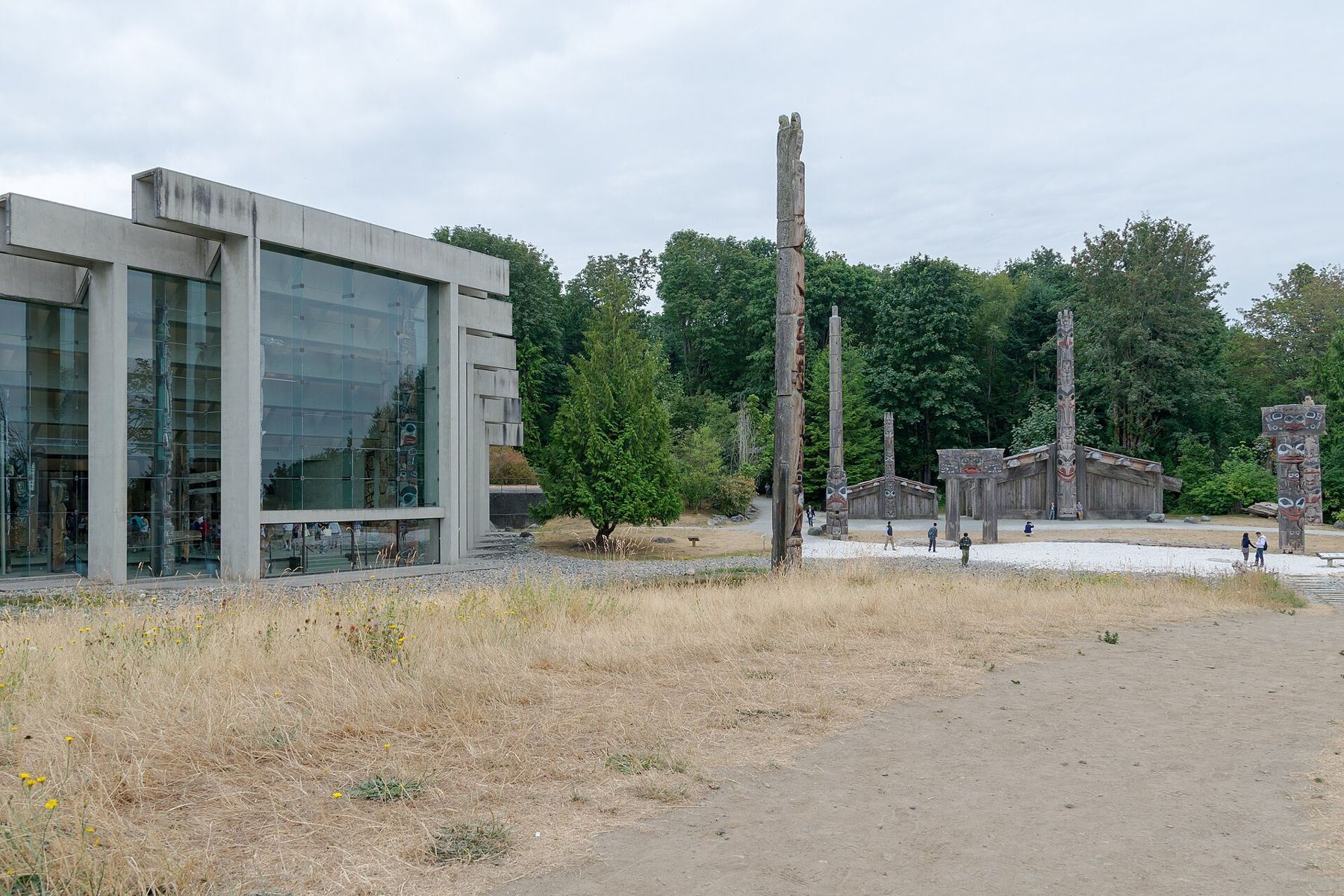
The building was designed by the Vancouver architect Arthur Erickson and opened in 1976. Its centrepiece, the Great Hall, borrows from the post-and-beam form of Northwest Coast big houses: tall concrete columns, deep beams and walls of glass reaching up toward the roof. Inside stand monumental poles, house posts, feast dishes and canoes from nations including the Haida, Gitxsan, Kwakwaka'wakw and Coast Salish peoples.
The hall closed for a major seismic upgrade and reopened in 2024. The work strengthened the structure against earthquakes and renewed the glass, so the room feels as it was designed to feel: carvings in front, and through the windows behind them, trees and sky.
On a rainy afternoon the light in the Great Hall is soft and even, and the grey sky makes the cedar look warmer. On a rainy afternoon the light in the Great Hall is soft and even, and the grey sky makes the cedar look warmer. Stand at the back of the room and let the scale settle in. Some of these poles once stood in villages along the coast; others were carved more recently by artists continuing the same traditions.
Bill Reid and The Raven and the First Men
In a round, skylit room off the main galleries stands one of the best-known works of Northwest Coast art: The Raven and the First Men, carved by the Haida artist Bill Reid and completed in 1980. Carved from a massive block of laminated yellow cedar, it shows Raven perched on a clamshell from which the first humans are struggling out, a story from Haida oral tradition set on a beach on Haida Gwaii.
Walk all the way around it. The figures emerging from the shell look curious, frightened and half-formed, and the details change as you move. Smaller works by Reid in gold, silver and argillite are shown nearby, and they reward close looking.
Reid, whose mother was Haida, became a key figure in the revival of Haida art in the second half of the twentieth century. His influence runs through much of the newer carving you see in the museum and across the city, and his bronze orca stands outside the entrance described in the guide to the aquarium on a wet afternoon.
 Same afternoon?Stanley Park, wet or dry
Open storage and the quieter galleries
Beyond the Great Hall, the Multiversity Galleries hold thousands of objects in glass cases and pull-out drawers, from the Northwest Coast and from cultures around the world: textiles, masks, baskets, tools, instruments and ceremonial pieces. This open-storage approach means you can browse far more of the collection than a typical museum shows, and on a wet day it is easy to lose two hours here.
The museum also has a gallery of European ceramics and space for changing exhibitions, which often feature contemporary Indigenous artists.
- Some cases carry notes from the communities the objects come from; read those before photographing anything.
- A few belongings are not shown, or are shown only in part, at a community's request.
- Benches are scattered through the galleries; use them, as the space is larger than it first looks.
The grounds outside
Behind the building, on a grassy rise above the cliffs, stand a Haida house and a group of poles. They were made around 1960 by Bill Reid and the 'Namgis artist Doug Cranmer, and newer poles have joined them since. When the rain eases, step outside to see them against the trees, and walk to the edge of the grounds for views across the water toward the North Shore mountains on a clear day.
The forest trails of Pacific Spirit Regional Park surround the campus and make a good dry-day add-on. Steep stairs near the museum also lead down the cliffs to the beaches below Point Grey; they are long and slippery when wet, so save them for a dry day.
Getting there and practical notes
Buses from across the region end at the UBC bus exchange, in the middle of campus. Frequent express buses run along Broadway and 41st Avenue, and a route runs across from Metrotown along 49th Avenue. From the exchange it is a walk of roughly ten to fifteen minutes to the museum; follow campus signs west toward the cliffs. The guide to SkyTrain and buses explains how fares and transfers work.
Give yourself at least two to three hours inside. There is a small cafe and a shop selling work by Indigenous artists. Combine it with a morning at the covered market on Granville Island for a full rainy day that barely requires an umbrella.
Top picture by Wpcpey