An island that is not quite an island
Granville Island sits under the southern end of the Granville Bridge, a low spit of land built up from tidal mudflats in the 1910s to hold sawmills, foundries and factories. For decades it was smoky, noisy and closed to visitors. In the 1970s the federal government began turning it into something else, and the public market opened at the end of that decade. Some industry stayed: a concrete plant still runs on the island, and its trucks still rumble past the food stalls.
That mix is the point. You walk along streets with no proper sidewalks, past old tin sheds painted in bright colours, between a working cement operation, a theatre, a houseboat community and a market hall full of fruit, fish and bread. It is busy, a little chaotic and very Vancouver.
It is also one of the best places in the city for a wet morning. The market is under one large roof, many of the studios open straight onto covered walkways, and the bridge deck overhead keeps some of the rain off the plaza below it.
Getting there by water or by bus
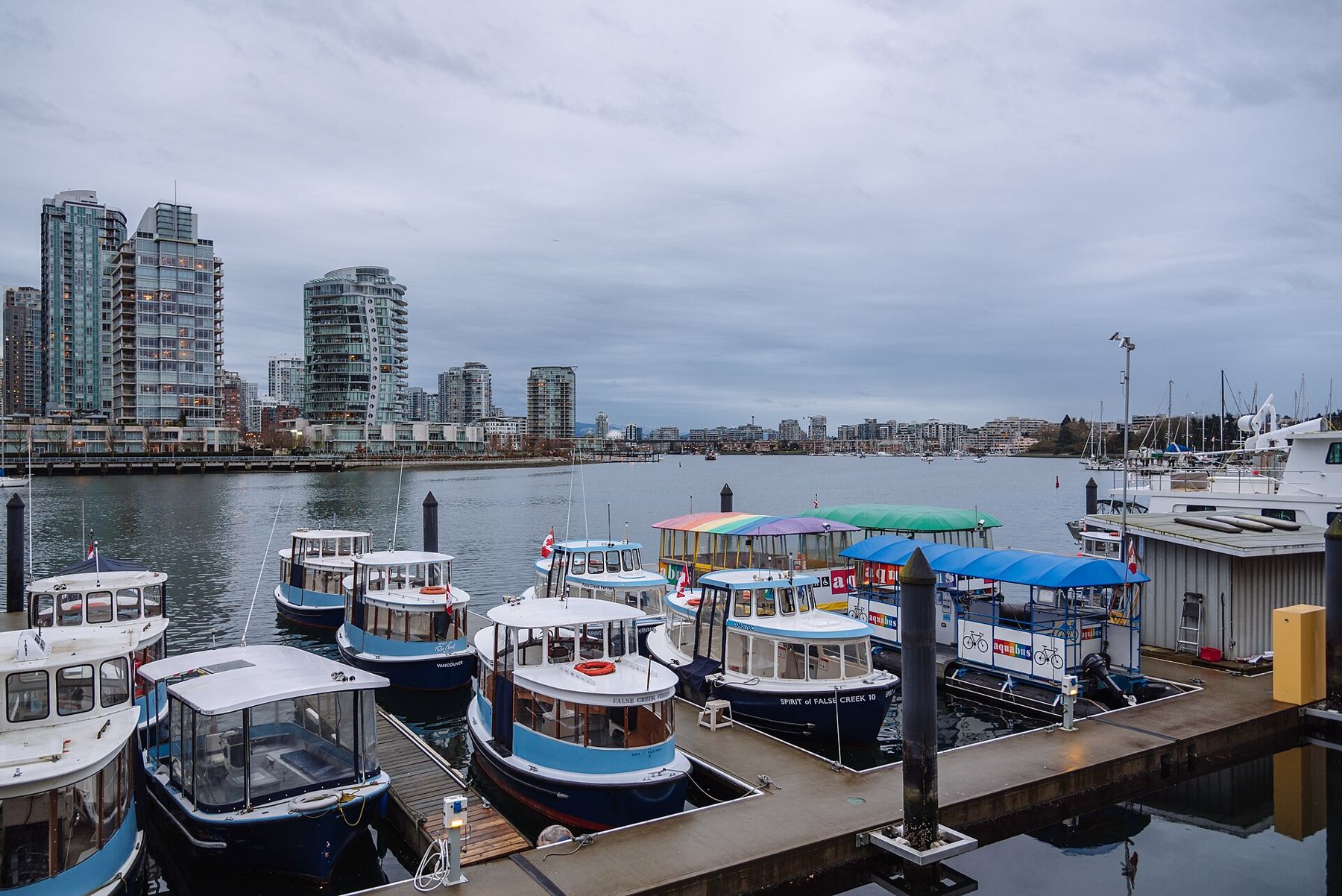
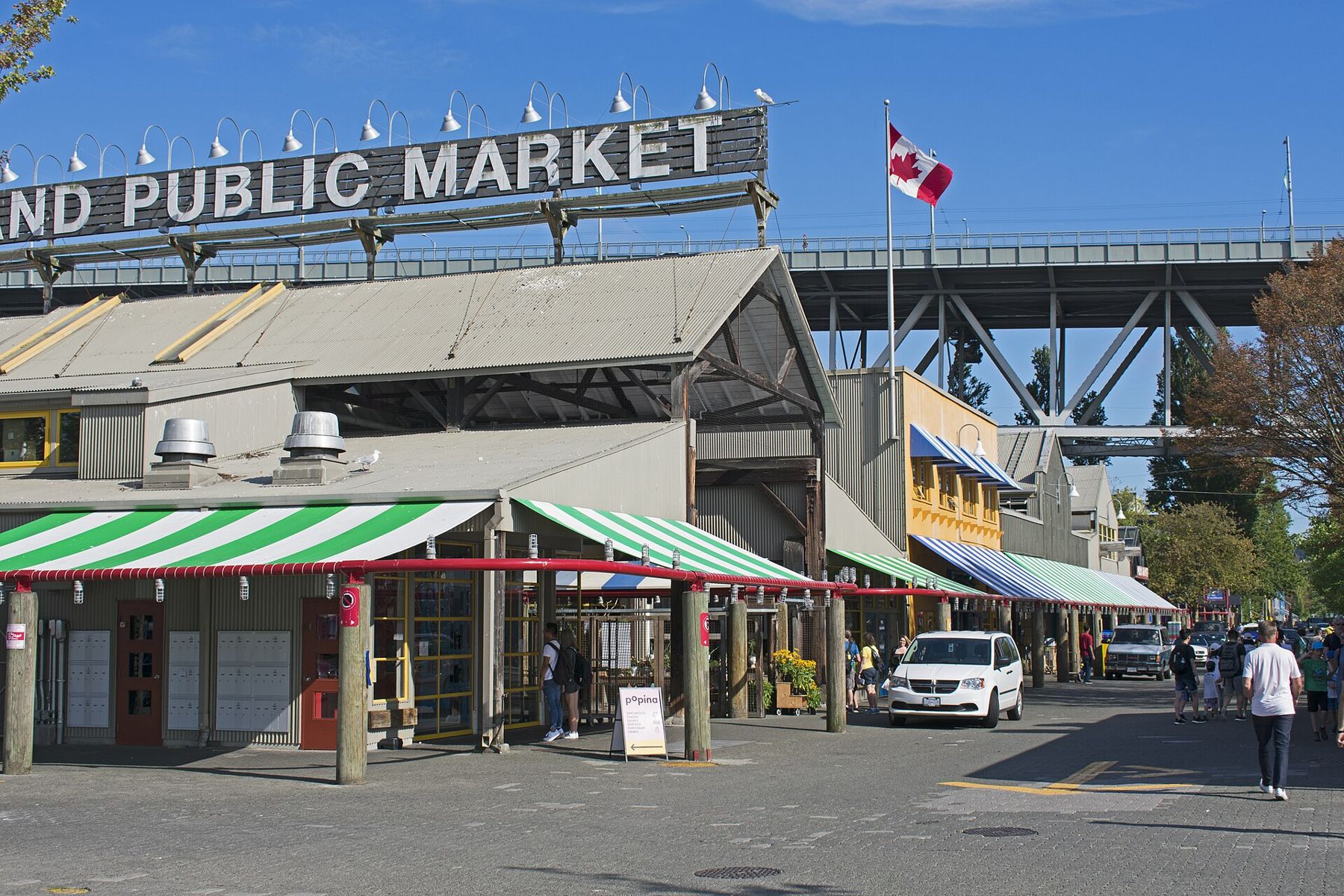
The most enjoyable way to arrive is by one of the small passenger ferries that cross False Creek. Two fleets of stubby little boats, some painted in rainbow colours, shuttle between docks on both shores, including the foot of Hornby Street, Yaletown, the Olympic Village and the Maritime Museum near Kitsilano. Crossings take only a few minutes and run through the day in most weather, though very high winds can pause them. These ferries are private services and do not take Compass fares.
By land, buses run along Granville Street and Fourth Avenue near the island; from the stops above, it is a short walk down to the entrance on Anderson Street. Driving is possible but parking on the island is tight, timed and often full on weekends. If you are coming from Metrotown or anywhere along the Expo Line, ride into downtown and pick up a ferry from the north shore of the creek. The guide to SkyTrain and buses covers how the transfers work.
Working through the market
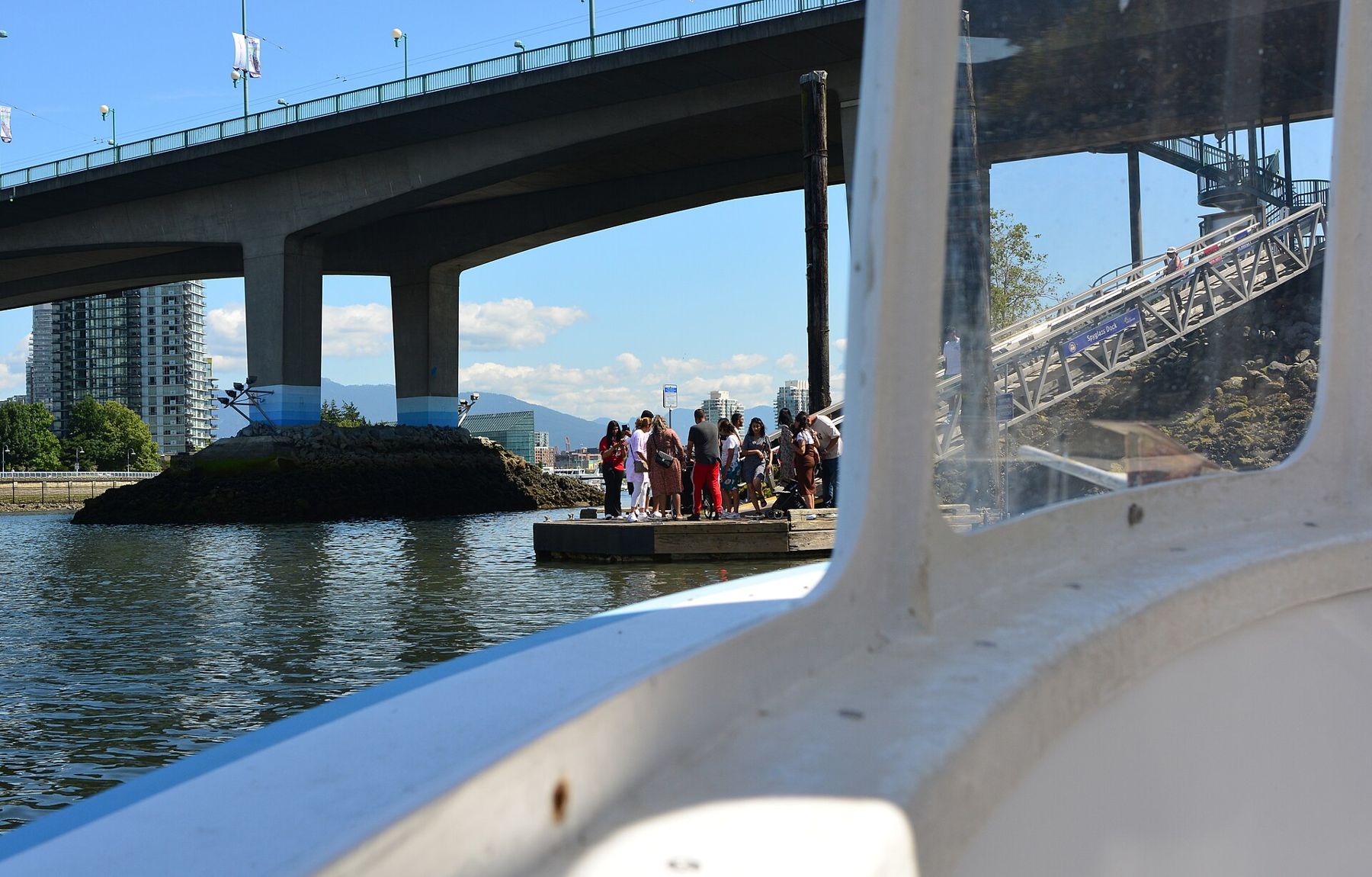
The public market is a long, open hall of permanent stalls rather than a collection of pop-up tables. Inside you find fresh produce, fishmongers, butchers, bakers, cheese counters, tea and coffee sellers, chocolate makers and a run of food counters where you can eat on the spot. Seating is limited and often taken, so many people carry their food out to the covered benches along the water.
On a wet day, aim to arrive close to opening. The aisles are calmer, the stallholders have time to talk, and the light through the big windows is soft and grey. By late morning on a Saturday the hall can become a slow shuffle of strollers, tour groups and shopping bags.
- Do a full lap before buying anything; the same kind of food appears at several stalls, and prices and styles vary.
- Look for seasonal fruit from the Fraser Valley and the Okanagan in summer and early autumn: berries, cherries, peaches and apples.
- Smoked and candied salmon travel reasonably well if you want something to take home.
- Watch your food outside. The gulls on the dock are bold and fast.
Studios, lofts and covered corners
Granville Island has long been an arts district as well as a market. The art and design university that used to anchor the east end moved to a new campus in 2017, but many working studios remain: glassblowers, potters, weavers, jewellers, printmakers and woodworkers, often with a window or open door so you can watch them at work.
 Same afternoon?Gastown and Chinatown under umbrellas
The Net Loft, a former industrial building across from the market, holds small studios and stalls under one roof and is a natural second stop when it is pouring. Railspur Alley, a short lane at the quieter end of the island, has a row of studios in small converted buildings and a covered walkway that is pleasant even in steady drizzle. A children's market building near the entrance is good for families on a wet afternoon.
Keep an eye out for the concrete silos at the east end. In 2014 they were painted with six enormous figures by a pair of Brazilian street artists, and the mural became one of the island's best-known sights. It is visible from the ferry, from the seawall and from much of False Creek.
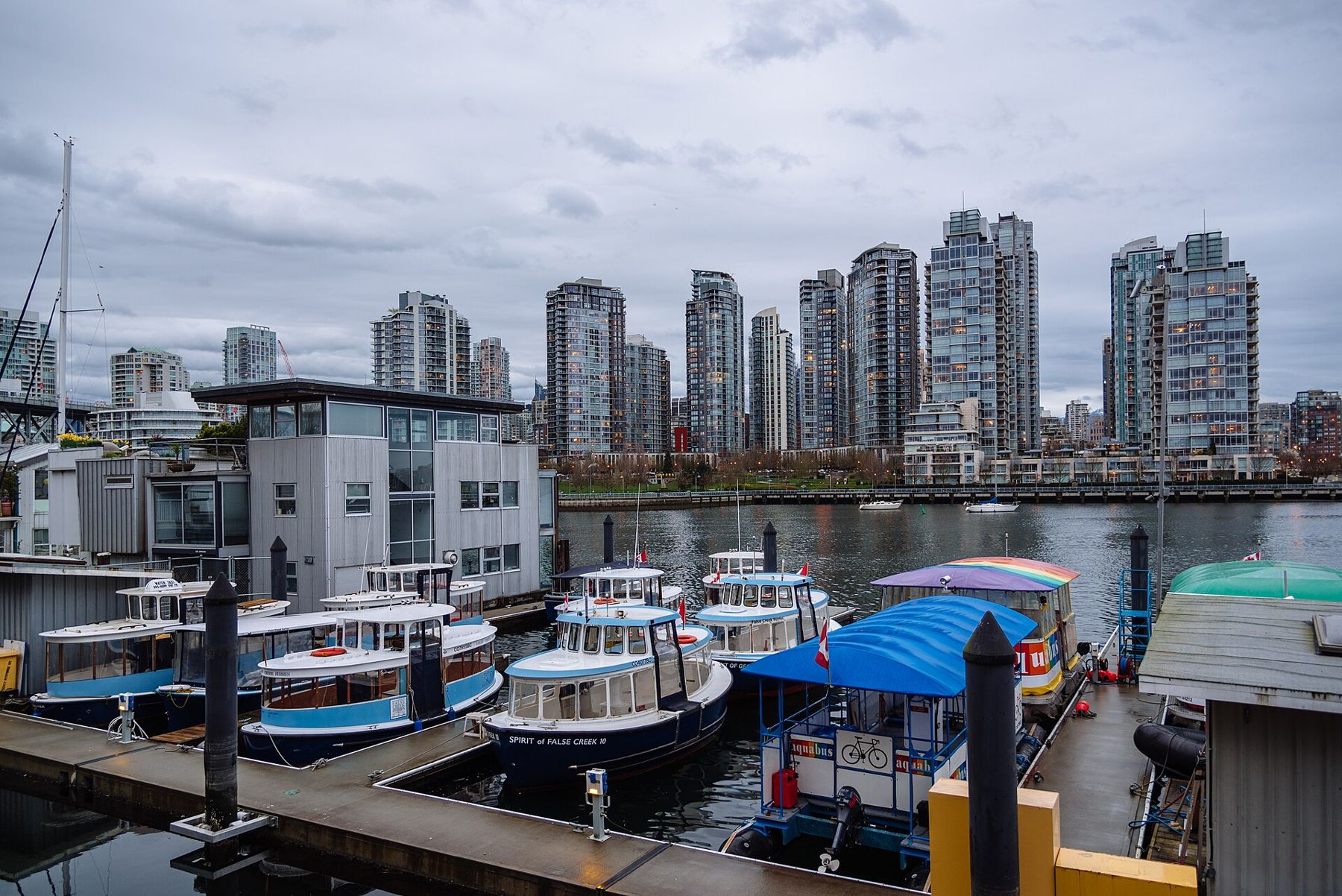
A wet morning here is about slow wandering rather than ticking off sights. A wet morning here is about slow wandering rather than ticking off sights. Duck into a studio, watch a glassblower turn a piece in the furnace, come back out when the shower passes and cross to the next shelter.
When the rain stops
The moment the sky clears, Granville Island turns outward. Take your market food to the docks and eat with a view of the boats and the towers of Yaletown across the water. The floating homes on the island's eastern shore are private, but you can see them from the public walkway at a respectful distance.
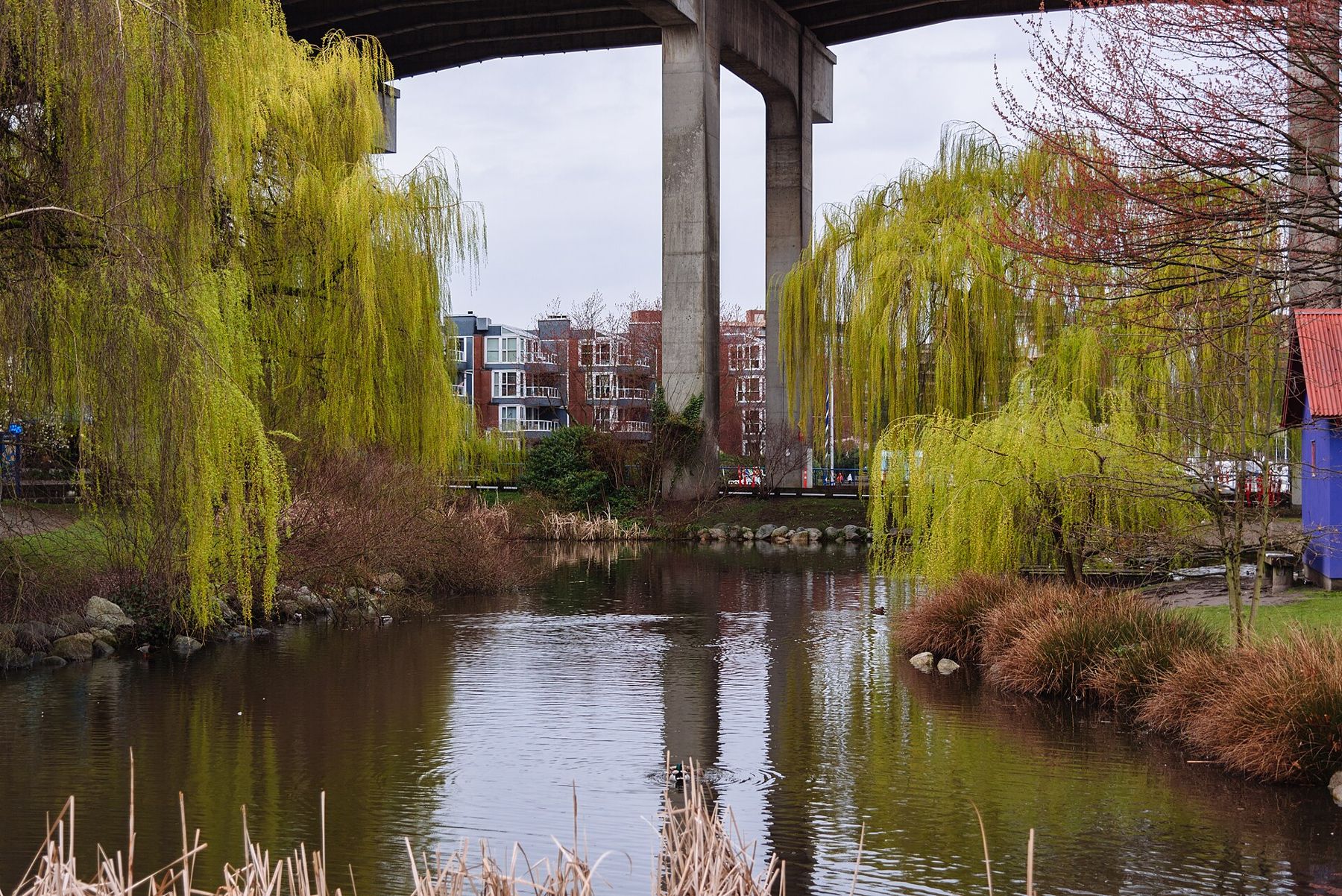
The False Creek seawall passes the island's south side. Head east and it leads past older townhouse neighbourhoods toward the Olympic Village and Science World. Head west and it runs under the Burrard Bridge to Vanier Park, the Maritime Museum and the edge of Kitsilano, where the guide to Kits, Spanish Banks and English Bay picks up from there. Bikes and walkers have separate lanes on much of the route, so stay on the walking side.
On a clear day you can also chain the island with other stops by ferry: across to Yaletown, along to the Olympic Village, or over to the dock by the Aquatic Centre near English Bay, a short walk from the Stanley Park seawall. The Stanley Park guide covers that loop in both kinds of weather.
Most stalls and studios open in the morning and close in the early evening, but individual hours vary, some studios close on certain days, and holiday schedules change.
There are washrooms in and around the market and a few covered spots to sit. Wear shoes that can handle wet wooden docks and puddled brick. An umbrella is useful between buildings but awkward inside the crowded market aisles; a hooded rain jacket is easier.
If you want a full wet-day circuit, pair a market morning here with an afternoon in a museum or under the glass of a garden. The Museum of Anthropology at the university is a bus ride away and fills a rainy afternoon on its own.
Top picture by Xicotencatl