Where the city began
Gastown is where Vancouver started. In 1867 a riverboat captain named John Deighton, nicknamed Gassy Jack for his talkativeness, opened a saloon on the shore near a sawmill, and a small settlement grew around it. It was formally laid out as the townsite of Granville in 1870 and became the heart of the new City of Vancouver in 1886. Weeks after incorporation, the Great Fire of June 1886 swept through and destroyed almost every building.
The town rebuilt quickly in brick and stone, and much of what you see on Water Street today dates from the decades that followed: warehouses, hotels and offices from the boom years when the railway arrived. Later the area declined into a run-down warehouse district, and in the 1960s a proposed freeway through the eastern neighbourhoods threatened to clear much of it. Residents, especially in Chinatown and Strathcona, fought the plan and won. Gastown was protected as a heritage area and is now a National Historic Site.
All of this sits on the lands of the Musqueam, Squamish and Tsleil-Waututh peoples, whose presence on this shoreline long predates any saloon.
Gastown on a wet day
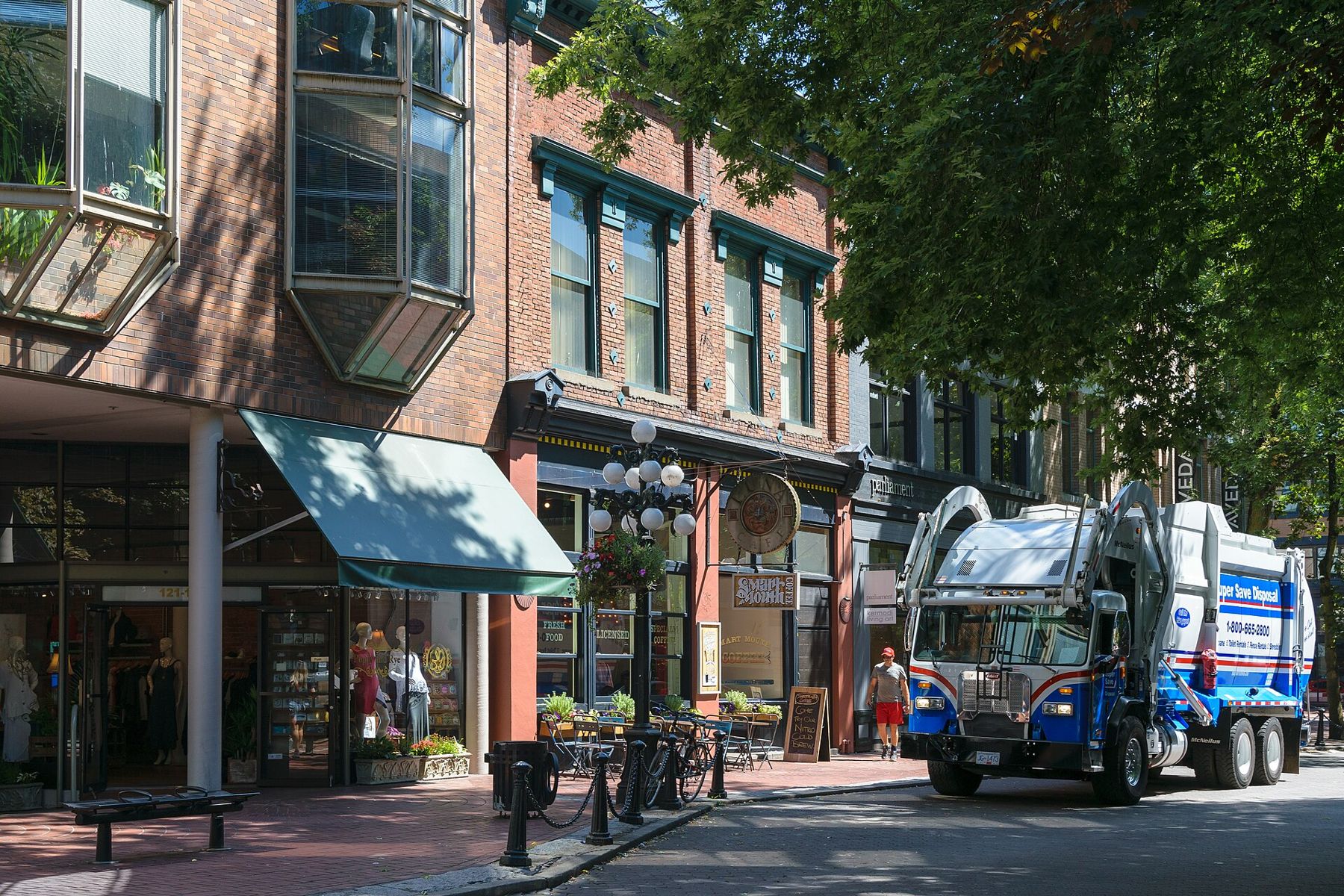
Begin at Waterfront station, a grand former railway station from 1914 where the Expo Line, the Canada Line and the SeaBus meet. Turn east onto Water Street and the city changes character immediately: brick paving, cast-iron globe lamps, old warehouse facades and awnings that give you cover for most of the block.
At the corner of Water and Cambie stands the steam clock, built in 1977 and fed partly by steam from the city's underground heating system. It sounds a whistled chime every quarter hour, and on cold wet days the plume of steam from its top is at its most visible. It occasionally goes quiet for maintenance, so do not plan a trip around it.
Keep walking east to Maple Tree Square, where Water, Carrall, Powell and Alexander streets meet. A statue of Deighton stood here on a whiskey barrel until protesters pulled it down in 2022, and it has not returned. Off the square and along Water Street, narrow lanes such as Blood Alley and Gaoler's Mews have the old brick and a little more shelter.
Wet brick is slippery. Wear shoes with good grip, and watch for cyclists and delivery vehicles on the narrow streets.
Between the two neighbourhoods
To reach Chinatown from Gastown, the usual route runs south along Carrall Street. On the way you cross Hastings Street at the heart of the Downtown Eastside, a neighbourhood where many people live with poverty, housing insecurity and addiction. It is also a community with a long history, strong local organisations and deep roots. Walk through as you would any neighbourhood: respectfully, without photographing people, and keeping to the main streets if you are unsure of the area.
These streets hold some of the hardest chapters in the city's history, and some of its most stubborn acts of community. These streets hold some of the hardest chapters in the city's history, and some of its most stubborn acts of community. Knowing a little before you go makes the walk more rewarding.
 Same afternoon?The Museum of Anthropology at UBC
Chinatown and its history
Chinese workers came to British Columbia in large numbers from the 1850s gold rush onward, and many more arrived in the 1880s to build the Canadian Pacific Railway through the mountains. Once the railway was finished, the federal government imposed a head tax on Chinese immigrants that rose steeply over the following years, and in 1923 it passed a law that shut out almost all Chinese immigration until 1947. Canada formally apologised for the head tax and exclusion in 2006.
Through those decades, Chinatown was a place of refuge, family associations, newspapers, theatres and shops. Today it is a National Historic Site. Many long-standing family businesses have closed in recent years, and community groups are working hard to keep the neighbourhood's culture alive.
The Millennium Gate spans Pender Street near Taylor, and Pender and Keefer are the main streets to walk. The Chinese Canadian Museum, which opened in 2023 in one of the oldest buildings in the neighbourhood, tells the story of Chinese Canadians across the country and is a strong choice for a wet hour or two.
Look up as you walk. Many buildings along Pender and Keefer have recessed balconies on their upper floors, a style brought from southern China, and the names of clan and benevolent associations still appear on facades. At the corner of Keefer and Columbia, a bronze memorial honours the Chinese railway workers and the Chinese Canadian veterans of the Second World War, many of whom served overseas before they were allowed to vote at home.
On a wet afternoon, bakeries and noodle and dim sum rooms make welcome stops between sights; you will find them on most blocks, so wander and choose by what looks busy and steamy. East of Chinatown, the residential streets of Strathcona hold some of the oldest wooden houses in the city, worth a short detour when the rain eases.
The Dr. Sun Yat-Sen Classical Chinese Garden
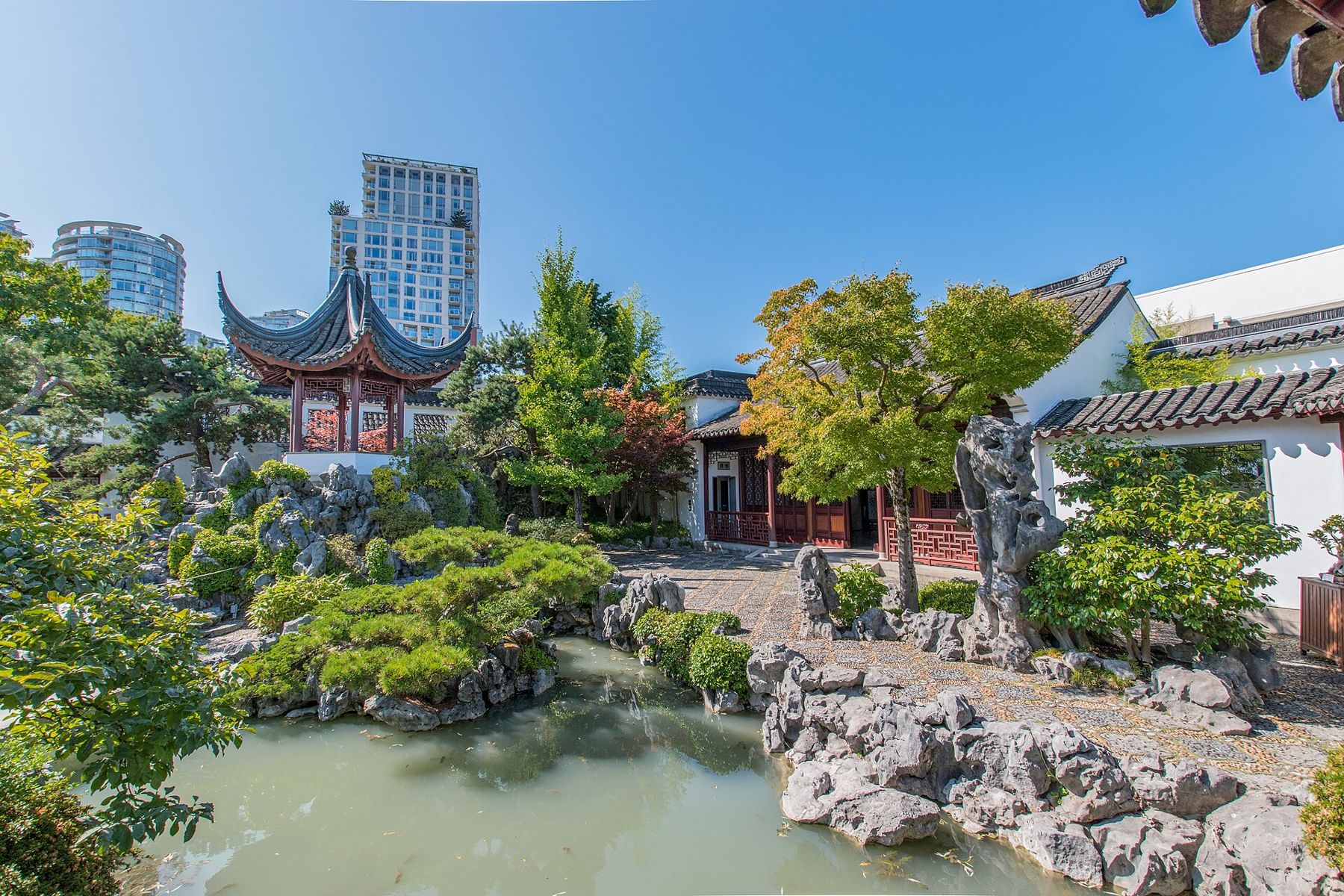
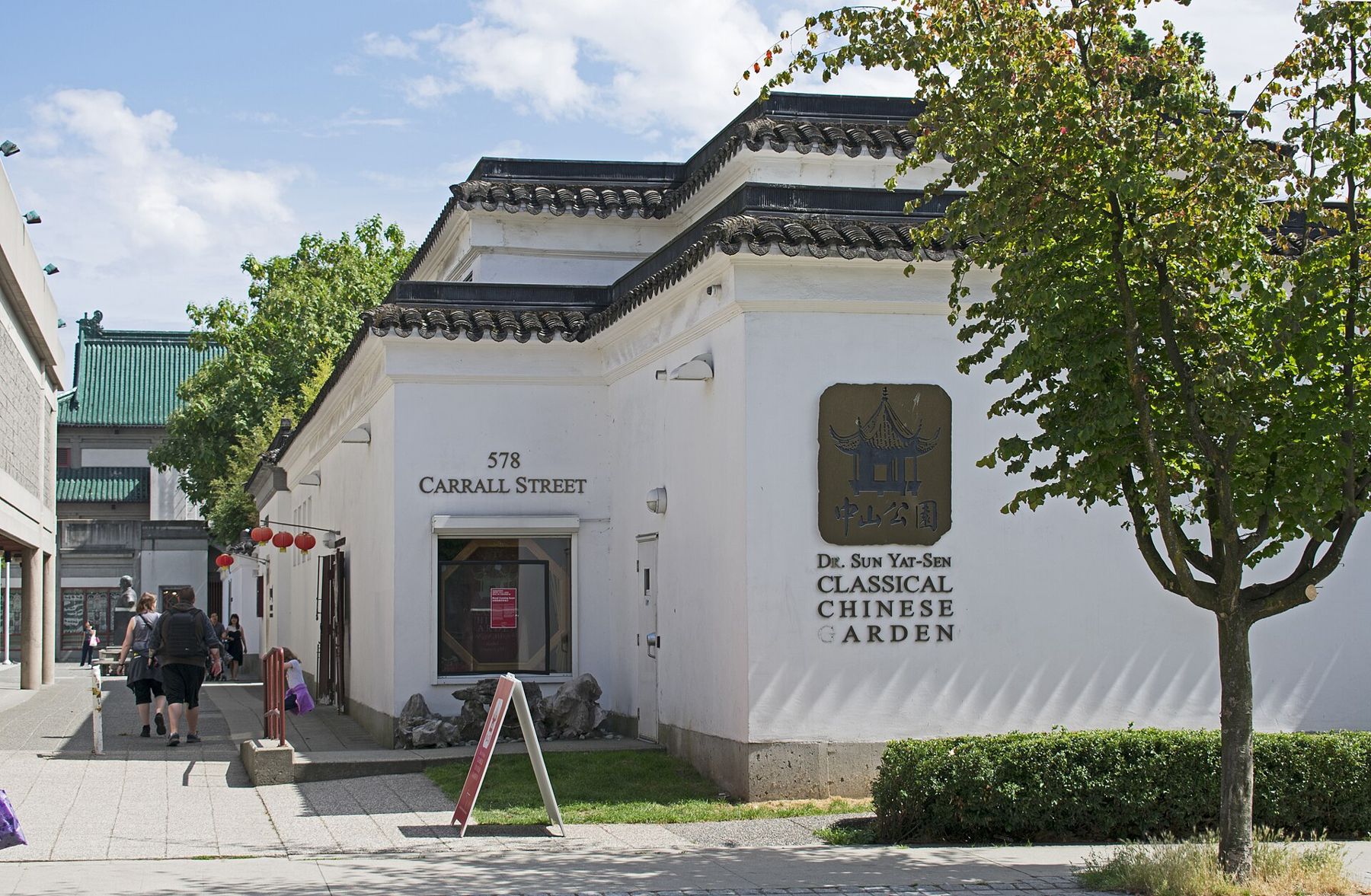
Tucked behind white walls at the edge of Chinatown, this garden was the first full-scale classical Chinese garden built outside China. It opened in 1986, built by artisans from Suzhou using traditional techniques and many materials brought from China, in the style of a Ming dynasty scholar's garden. Admission is charged; guided tours are often included, and they explain the meaning of the rocks, water, plants and buildings.
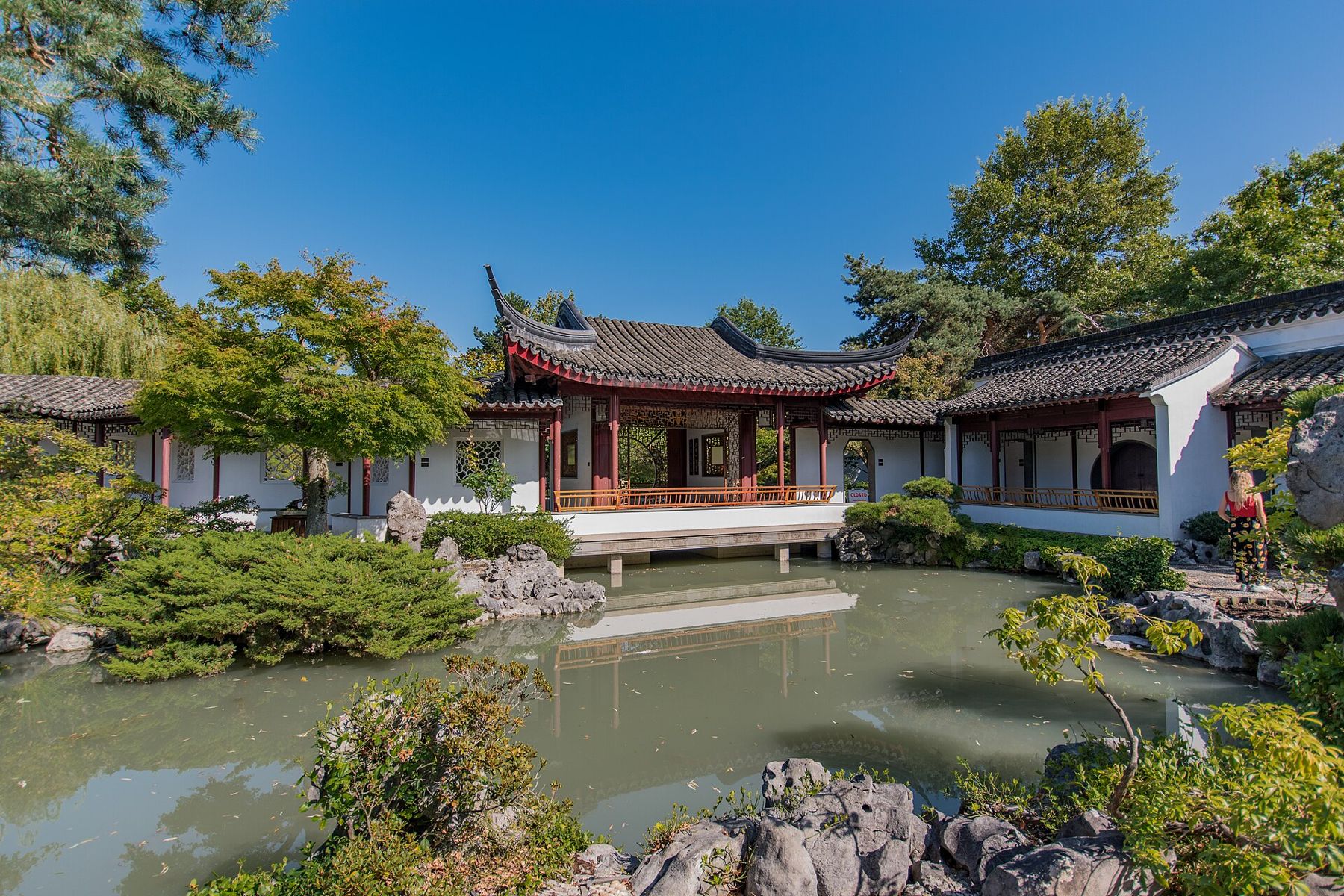
Rain suits this place. Covered corridors with latticed windows link the pavilions, so you can circle much of the garden staying almost dry while drops ring on the tiled roofs and spread across the pond. The water is deliberately cloudy and green, so that it reflects the buildings and sky. Next door, a free public park shares the same pond and has its own pavilion and bridge, open to anyone walking by.
Into Gastown
Waterfront station is the natural start for Gastown, and Stadium-Chinatown station on the Expo Line is the closest SkyTrain stop to Chinatown, so you can walk the loop in either direction. From Waterfront, the SeaBus also leaves for the North Shore; the guide to the SeaBus and Lonsdale Quay covers that crossing. The guide to SkyTrain and buses explains fares and transfers.
If dumplings and noodles are the main event, the food scene in Richmond is even larger, as the guide to Richmond for dumplings explains. For a second covered stop on the same wet day, Granville Island is a short bus or ferry trip away.
Top picture by Ɱ