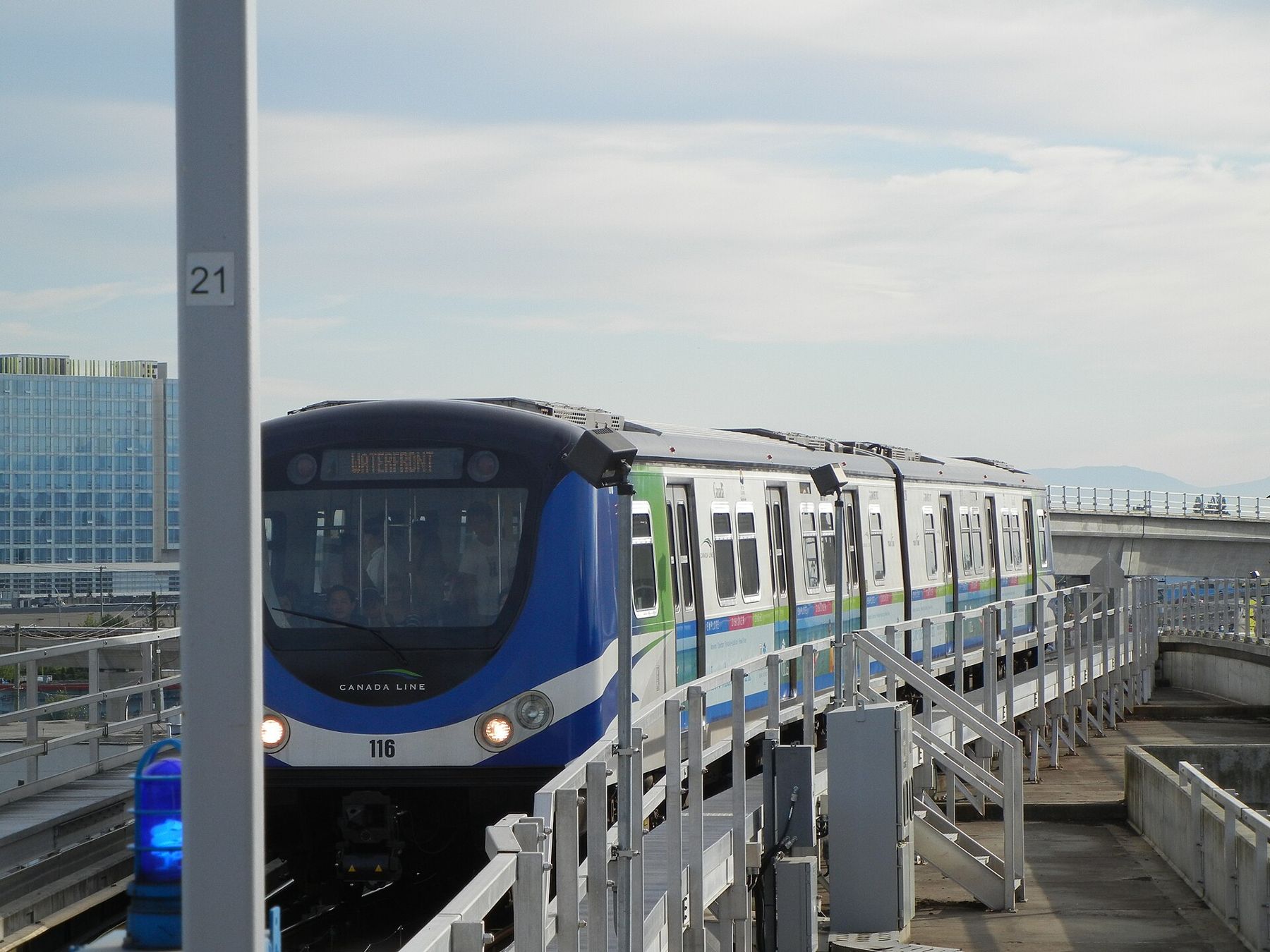
Vancouver's public transit is easy once you know a few rules. SkyTrain, the region's automated rapid transit, runs on three lines with no drivers on board. The SeaBus ferries people across the harbour to North Vancouver. A large bus network fills in everything else. One fare system covers the lot, and you rarely need to plan far ahead. Here is how it all fits together.
The three SkyTrain lines
The Expo Line is the oldest, opened for the 1986 world's fair. It runs from Waterfront station downtown, through East Vancouver and Burnaby, past Metrotown, and on to New Westminster, where it splits: one branch crosses the Fraser to Surrey, the other heads to Production Way-University.
The Millennium Line runs from VCC-Clark in East Vancouver through Burnaby to Coquitlam. It meets the Expo Line at transfer stations, including Commercial-Broadway.
The Canada Line runs from Waterfront south under downtown and along Cambie Street, then crosses the north arm of the Fraser. It splits at Bridgeport: one branch goes to the airport, the other to Richmond-Brighouse in central Richmond.
Waterfront station is the main hub, linking the Expo and Canada lines with the SeaBus and the commuter rail service to the eastern suburbs.
How to pay and tap
The fare system is called Compass. You have a few ways to pay:
- A reloadable Compass Card, bought from machines at stations and loaded with stored value or a pass.
- A single-use Compass ticket from a station machine.
- A contactless credit card or phone wallet, tapped directly on the reader.
On SkyTrain and the SeaBus, tap in at the fare gate when you enter and tap out when you leave. On buses, tap once as you board; there is no need to tap off. Use the same card or phone for every tap on a trip, and give each person in a group their own card, since one card cannot pay for two people at once.
A few habits save trouble. Tap firmly and wait for the beep and the green light before you walk through. If a gate does not open, try again rather than following someone through. If you forget to tap out on SkyTrain, the system may charge you the highest fare, so make it a reflex at the end of every ride. Machines at every station sell tickets and reload cards, and most accept cards as well as cash.
Zones, in general terms
The region is divided into fare zones, and on SkyTrain and the SeaBus the weekday daytime fare depends on how many zones you travel through. Vancouver itself is in the first zone; Burnaby and North Vancouver are in the second; Richmond, Surrey and the farther suburbs are in the third.
The useful part to remember: buses always charge a single-zone fare, and on weekday evenings, weekends and holidays the whole system drops to a single-zone fare as well. A fare also lets you transfer between buses, trains and the SeaBus for a set period after your first tap.
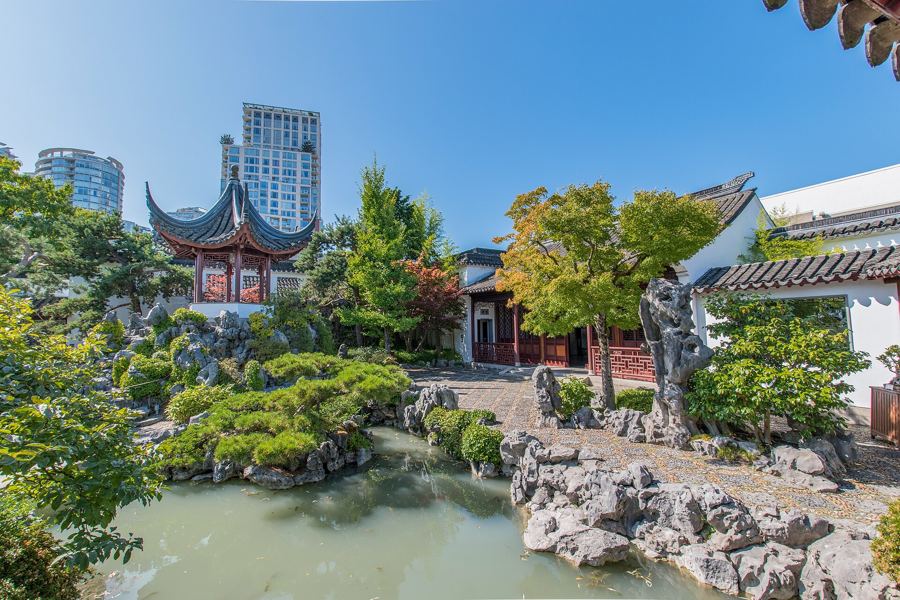 Same afternoon?Gastown and Chinatown under umbrellas
The airport line
The Canada Line is the quickest way between the airport and downtown, taking roughly half an hour to Waterfront. The airport station sits right beside the terminals. Note that trips starting at the airport stations carry an extra charge on top of the normal fare; trips heading to the airport do not. Buy a ticket at the machines inside the station, or tap a contactless card at the gate.
The same line takes you to Richmond, handy for an evening of dumplings and the summer night market, or on by bus to the fishing harbour at Steveston.
Buses and the SeaBus
Buses go almost everywhere the trains do not: the beaches, the university, the parks and the North Shore. Many routes run frequently all day, and some express routes have fewer stops along busy corridors. Board at the front, tap your card, and press the bell or pull the cord before your stop.
The SeaBus crosses Burrard Inlet between Waterfront and Lonsdale Quay in about fifteen minutes, with views of the port, the mountains and the downtown skyline. It is part of the same fare system, and the SeaBus and Lonsdale Quay story has more on what to do on the other side.
Tips that make it easier
- Stand to the right on escalators and let people off before you board.
- Trains run from early morning until past midnight; check last-train times if you are out late.
- Night buses cover some main routes after the trains stop.
- With no driver's cab, the front window of an Expo or Millennium Line train is open to passengers, and the view from there is one of the best free shows in town.
- Bikes are allowed on trains outside the busiest times, with some limits.
For a ride with a destination, take the Expo Line to Metrotown and head on to Deer Lake and the Burnaby parks, or stay on board to watch the line rise above the city on its elevated guideway.
Rain or shine
Transit works in any weather, but it really earns its place on wet days. SkyTrain stations are covered, trains come often, and you can link indoor stops across the city without spending much time in the rain. On dry days, the elevated sections and the SeaBus double as sightseeing. Either way, it is cheaper and easier than driving and parking downtown.
Top picture by Jeremy Andrews