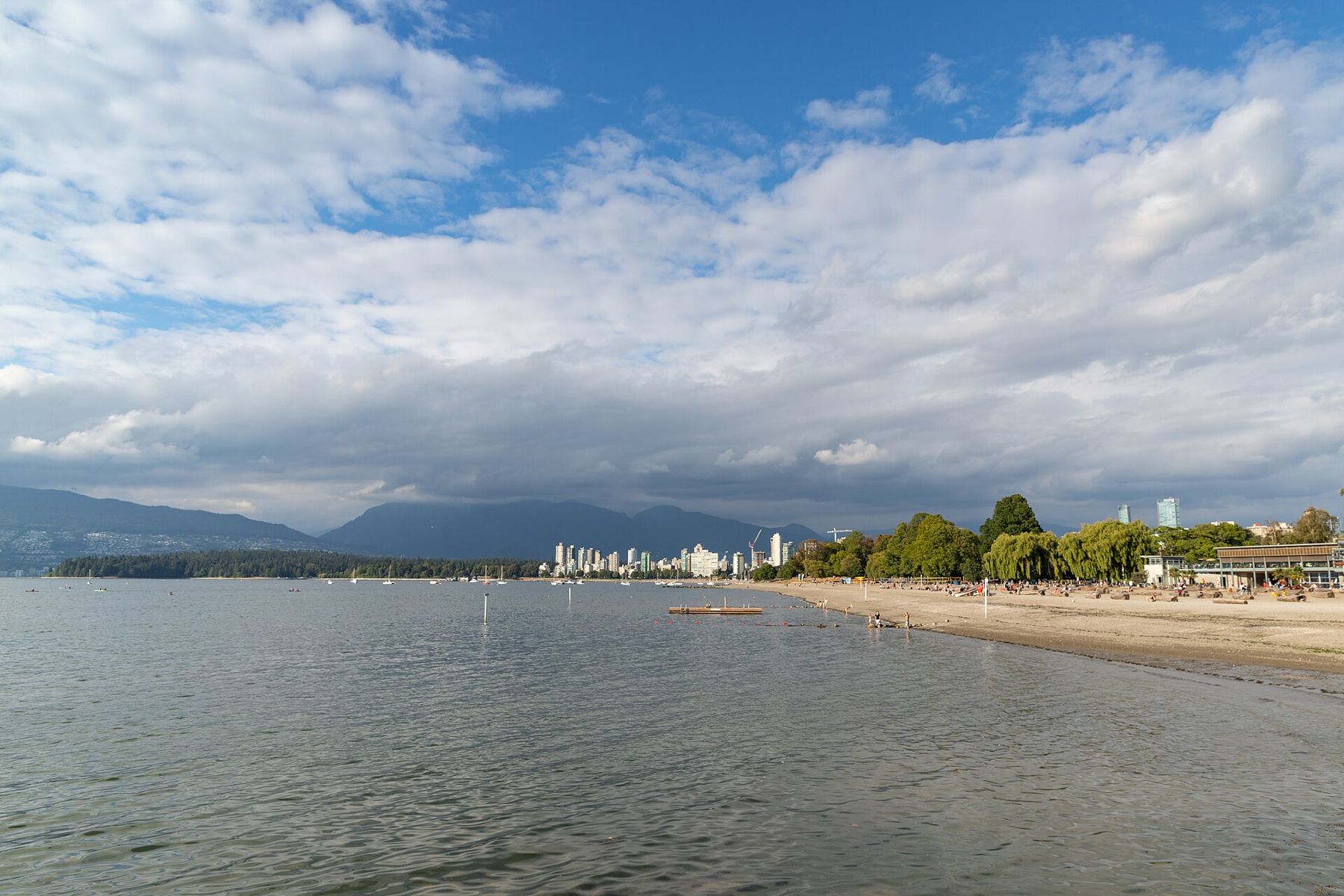
Vancouver has a long run of city beaches, wrapped around English Bay from the West End to the cliffs below the university. They are not tropical. The water is cool, the sand is often coarse, and driftwood logs line the shore instead of loungers. But on a clear summer day, with the mountains standing behind the water and the sun setting straight out to sea, few cities can match them. The trick is picking the beach that suits your mood.
These shores are in the territories of the Musqueam, Squamish and Tsleil-Waututh Nations, and the Musqueam in particular have lived around the river mouth and these western shores for thousands of years.
Kitsilano: busy, sporty, social
Kits Beach is the city's most energetic. On a summer afternoon the volleyball courts are full, the lawns behind the sand are covered in towels, and the path along the shore is busy with runners and cyclists. Across the water you look straight at the downtown towers, the green mass of Stanley Park and the North Shore mountains.
Next to the beach is a long outdoor saltwater pool, open in the warmer months, which is a good choice if the sea feels too cold.
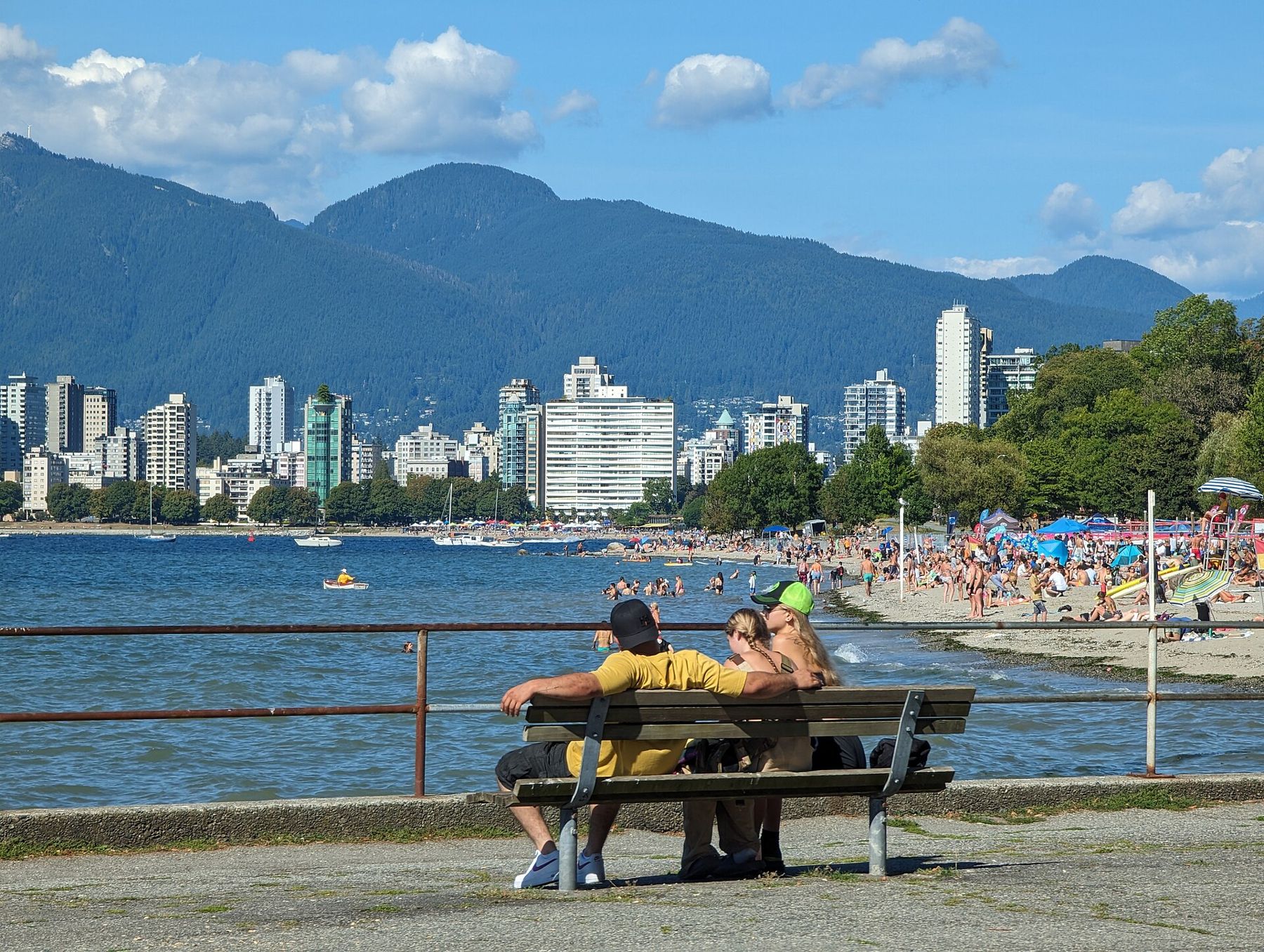
Kits is easy to reach by bus from downtown, or on foot along the seaside path from Granville Island and Vanier Park. That walk makes a good morning on its own; see the Granville Island story for that end of it.
Jericho and Locarno: the quiet middle
Between Kits and Spanish Banks lie two beaches that many visitors skip, and they are worth a stop if you want something calmer. Jericho Beach backs onto a large park with open fields, a small pond and marshy patches where herons stand still in the shallows. A pier reaches out over the water, and small sailing boats often fill the bay on breezy summer afternoons.
Locarno, just to the west, is long and sandy with a grassy strip behind it, popular with families who want room to spread out. Both beaches face north across the water to the mountains and the city, and both stay quieter than Kits even on hot weekends. A flat path runs along much of this shore, so you can walk or cycle from one beach to the next and stop wherever the mood takes you.
Spanish Banks: space and low tide
Head west along the shore, past Jericho and Locarno, and the beaches become longer, flatter and quieter. Spanish Banks is the last stretch before the cliffs, and it has the most space of any city beach. The name recalls a meeting here in 1792 between British and Spanish ships charting the coast.
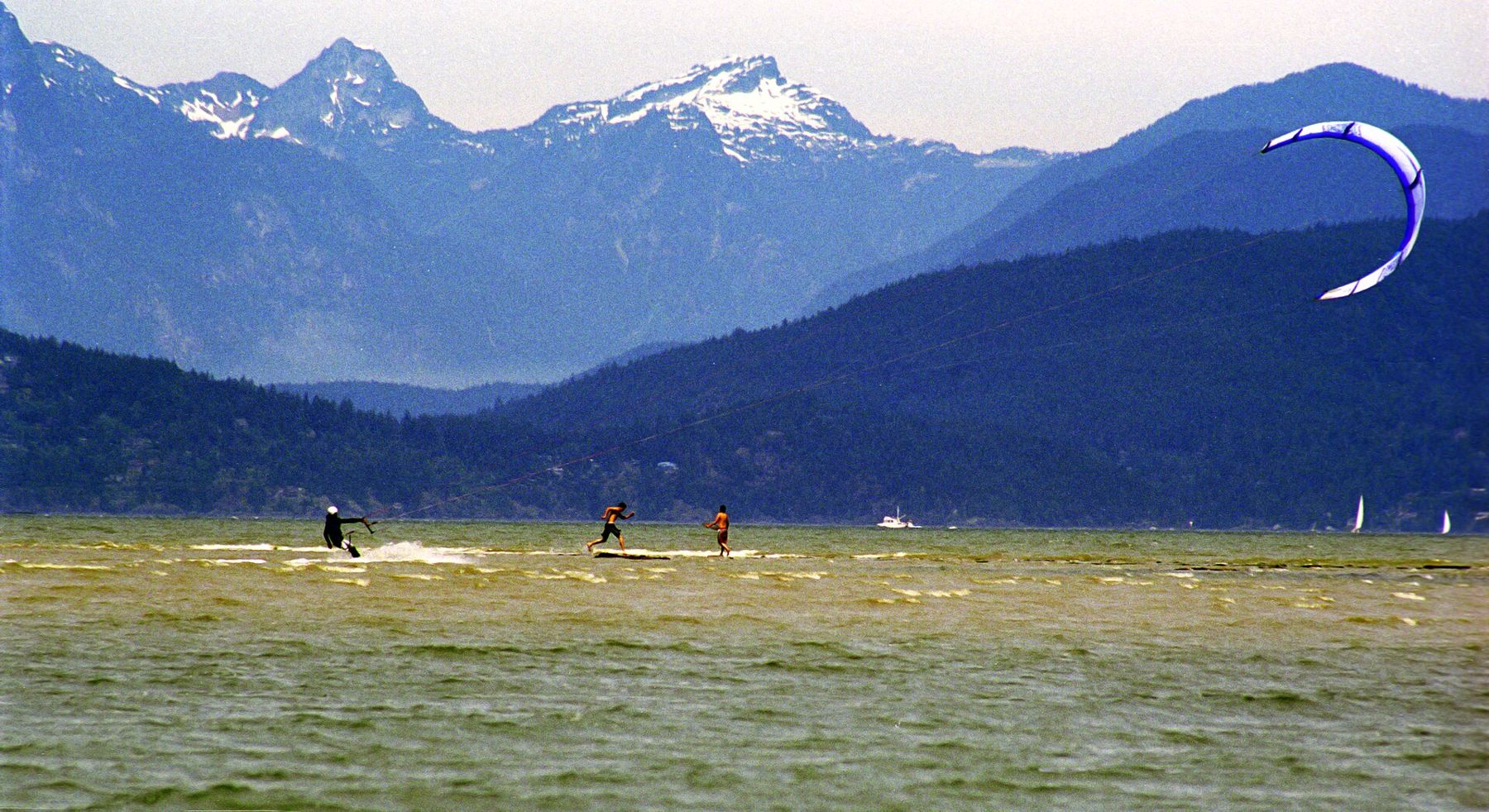
The real draw is the tide. At low water, the sand flats stretch a long way out from the shore, and you can walk out across ripples, pools and sandbars, with the North Shore mountains in front of you. Kiteboarders use the shallow water when the wind is up, and families come for the tide pools.
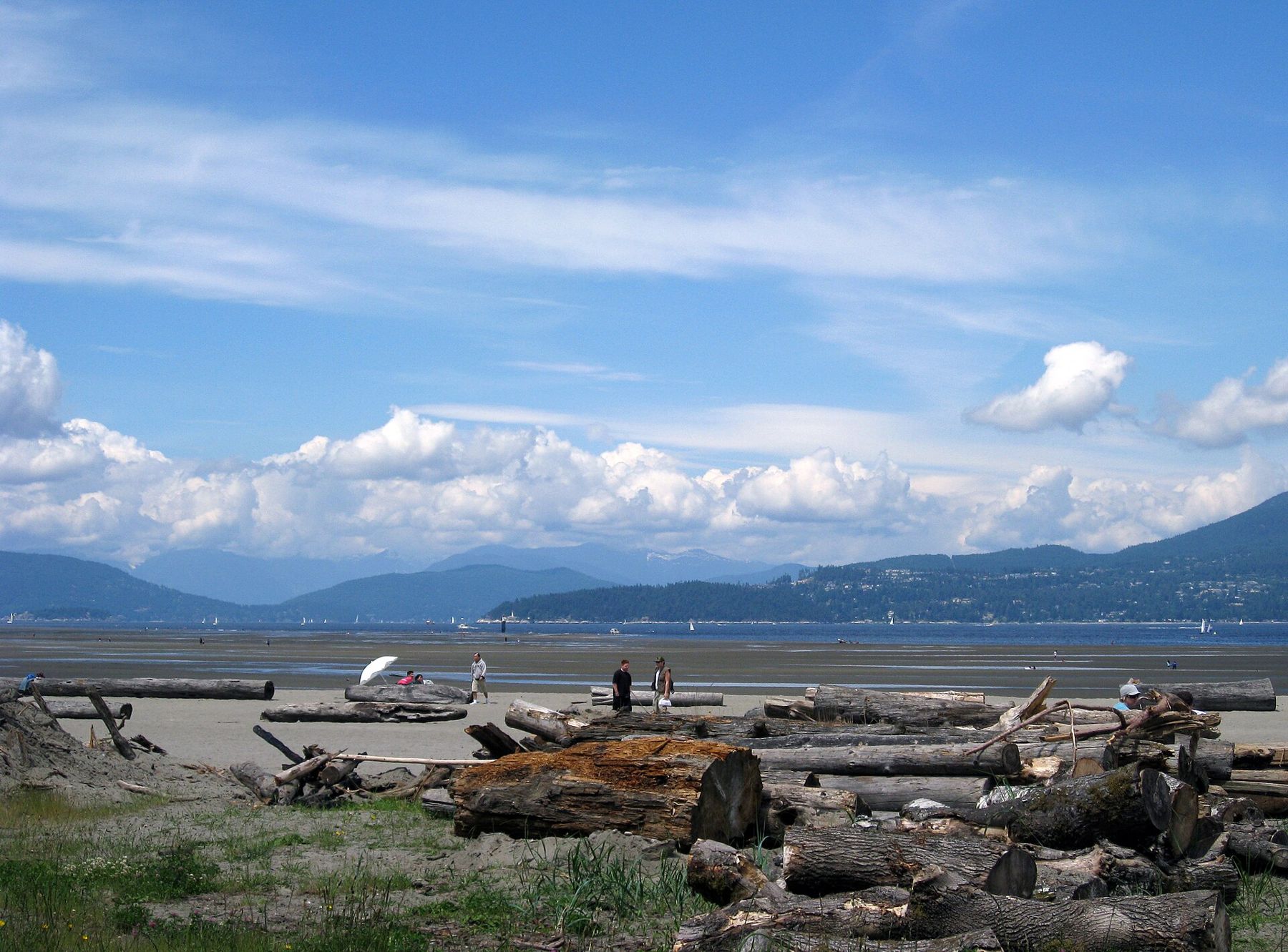
The tide comes back in steadily, and the low channels fill first, so do not wander so far that you cannot see your way back. Spanish Banks is also a good place for a picnic among the logs, and there are views across to the mountains in every direction.
Beyond Spanish Banks, below the university, is Wreck Beach, a clothing-optional beach reached by long, steep stairs. It is a different world, and worth knowing about before you wander that way. The university also holds the Museum of Anthropology, a natural rainy-day alternative if the weather turns while you are out west.
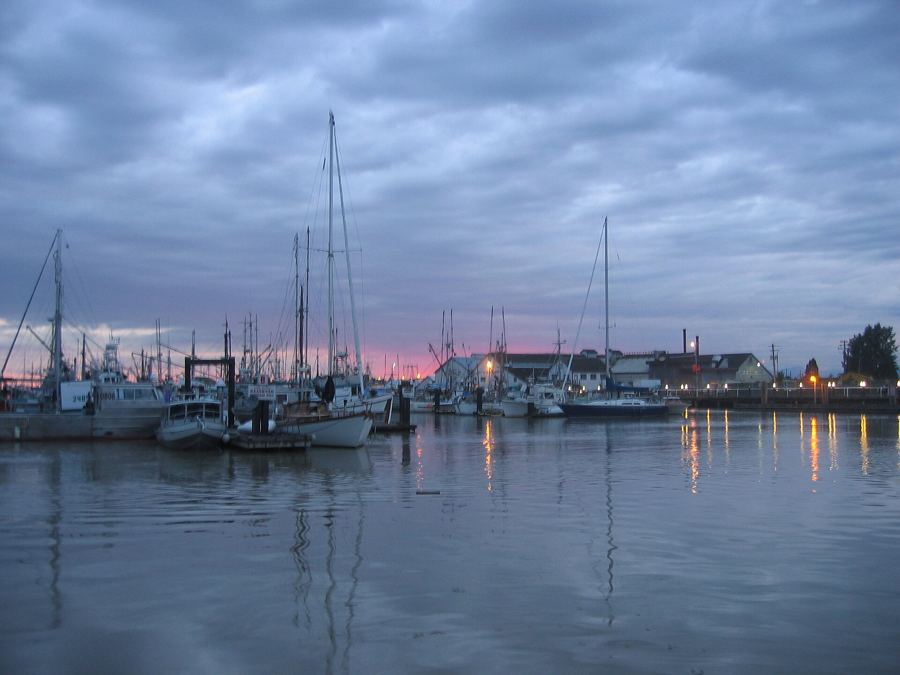 Same afternoon?Steveston, where the Fraser meets the sea
English Bay: the sunset beach
English Bay Beach sits at the edge of the West End, close to downtown, and it is the city's front porch. The sand faces west over the water, which makes it the best place in town to watch the sun go down. On fine evenings people gather on the logs and the grass with takeaway food and wait for the sky to change colour.
Along the shore you will find a stone inukshuk, built for the 1986 world's fair, and the start of the seawall path that runs into Stanley Park. Nearby are Sunset Beach and the walk under the Burrard Bridge towards False Creek. In summer, a fireworks competition draws large crowds to the bay on certain nights; check dates and expect closures nearby.
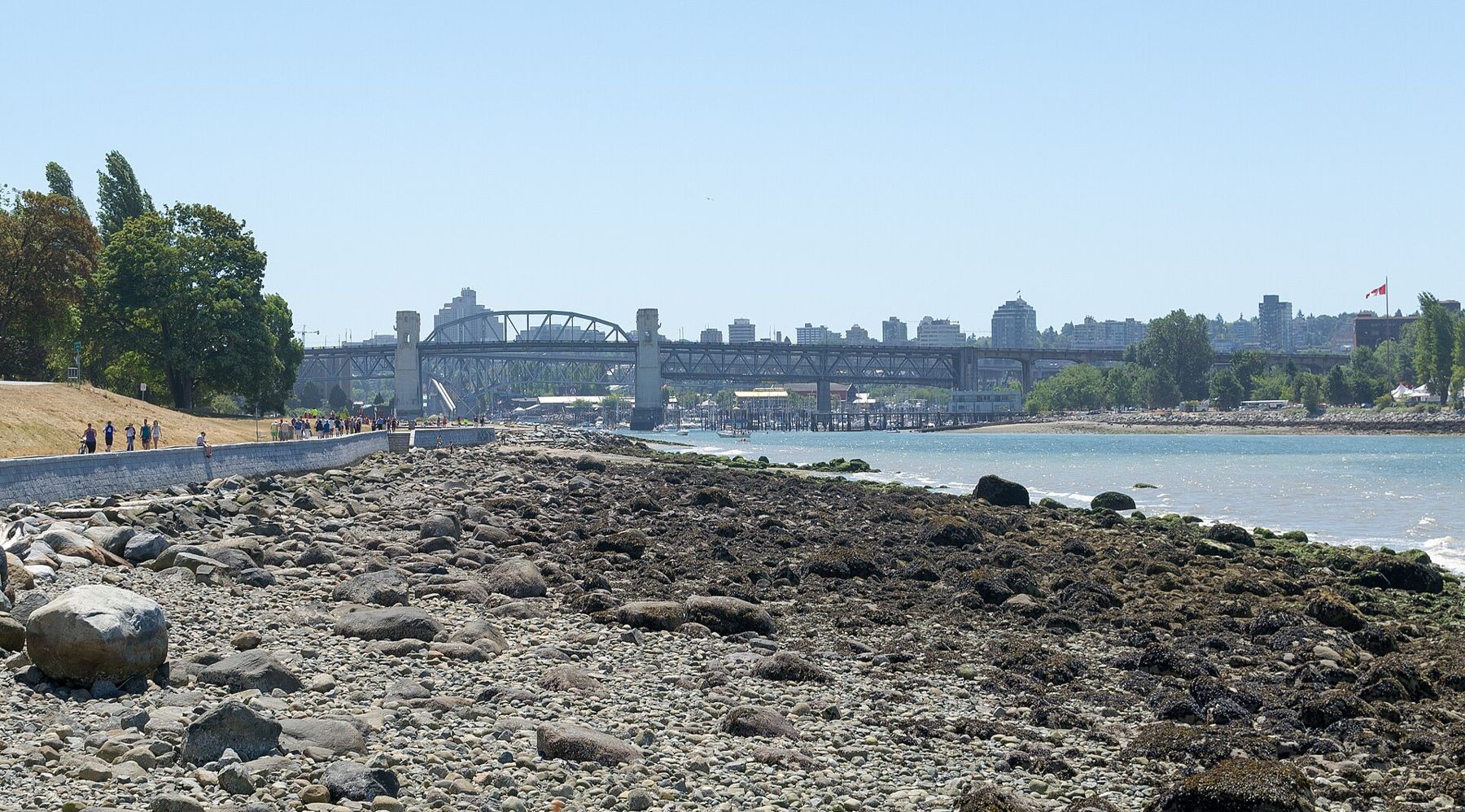
English Bay is the easiest beach to reach without a car. You can walk from most of downtown in well under half an hour, and buses run along the nearby streets.
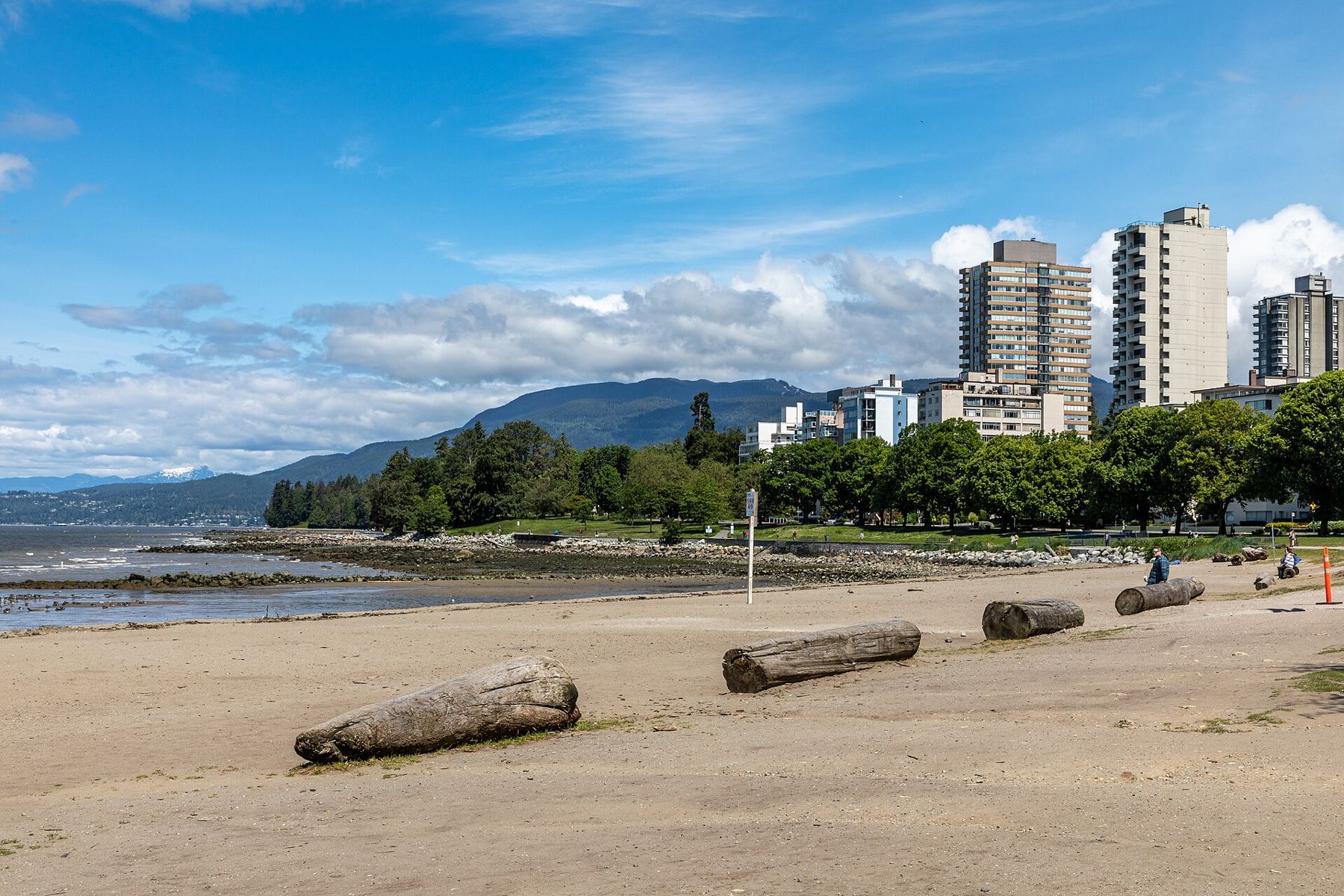
On fine evenings people gather on the logs and the grass with takeaway food and wait for the sky to change colour.
Swimming, water and safety
The water off Vancouver's beaches is cool even at the height of summer, and colder still after windy spells or early in the season. Many people swim, but most do so briefly. Lifeguards are on duty at the main beaches in the summer season; swim near them and within the marked areas.
- Water quality is tested through the summer, and advisories are posted when bacteria levels are high, often after heavy rain.
- Logs on the beach can roll in waves at high tide. Do not sit or play among them when the water is up.
- Bring water shoes for rocky patches and barnacles.
- Pack a warm layer for the evening; the temperature drops quickly once the sun goes down.
- Rules on alcohol, fires and smoking vary by beach and change over time, so read the signs.
Rain or shine
These are dry-day beaches, at their best from June to September, when the region has its long dry season. In spring and autumn they are quieter and still lovely on a clear day; in the wet months they become places for a bracing walk rather than a lie on the sand. If you are visiting outside summer, read up on dressing for Vancouver's rain and treat a sunny day as a gift to use on the shore.
Buses connect all three beaches with downtown, though service to Spanish Banks is less frequent than to Kits or English Bay. The SkyTrain and buses guide has the basics. On a long summer day, you can string all three together: Spanish Banks in the morning, Kits in the afternoon, and English Bay for the sunset.
Top picture by dronepicr