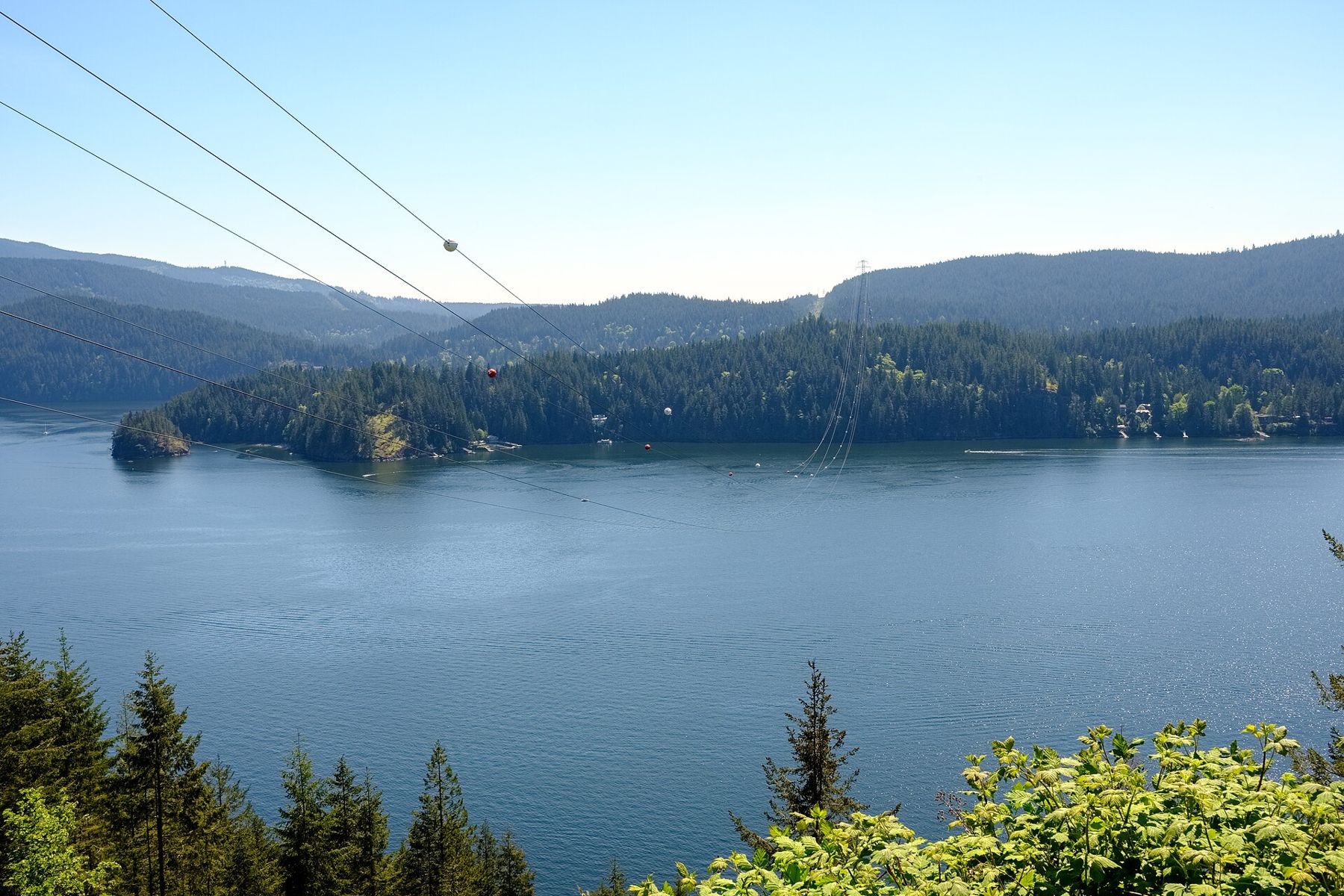
Deep Cove sits at the far eastern edge of North Vancouver, where Burrard Inlet turns north into Indian Arm. The village is small: a short main street, a waterfront park, a marina and a crescent of steep, forested hills around a calm bay. On a sunny weekend it can feel like half the city has the same idea as you. Go early, or go on a weekday, and it is one of the most rewarding short trips from downtown.
Whose waters these are
Indian Arm and the surrounding shores are the heart of the territory of the Tsleil-Waututh Nation, whose name means People of the Inlet. Their villages, fishing sites and trails lined these waters long before the cove became a weekend destination, and the Nation remains closely involved in caring for the inlet today. On the drive or bus ride in, you pass a shoreline park whose official name, Whey-ah-Wichen, reflects that history.
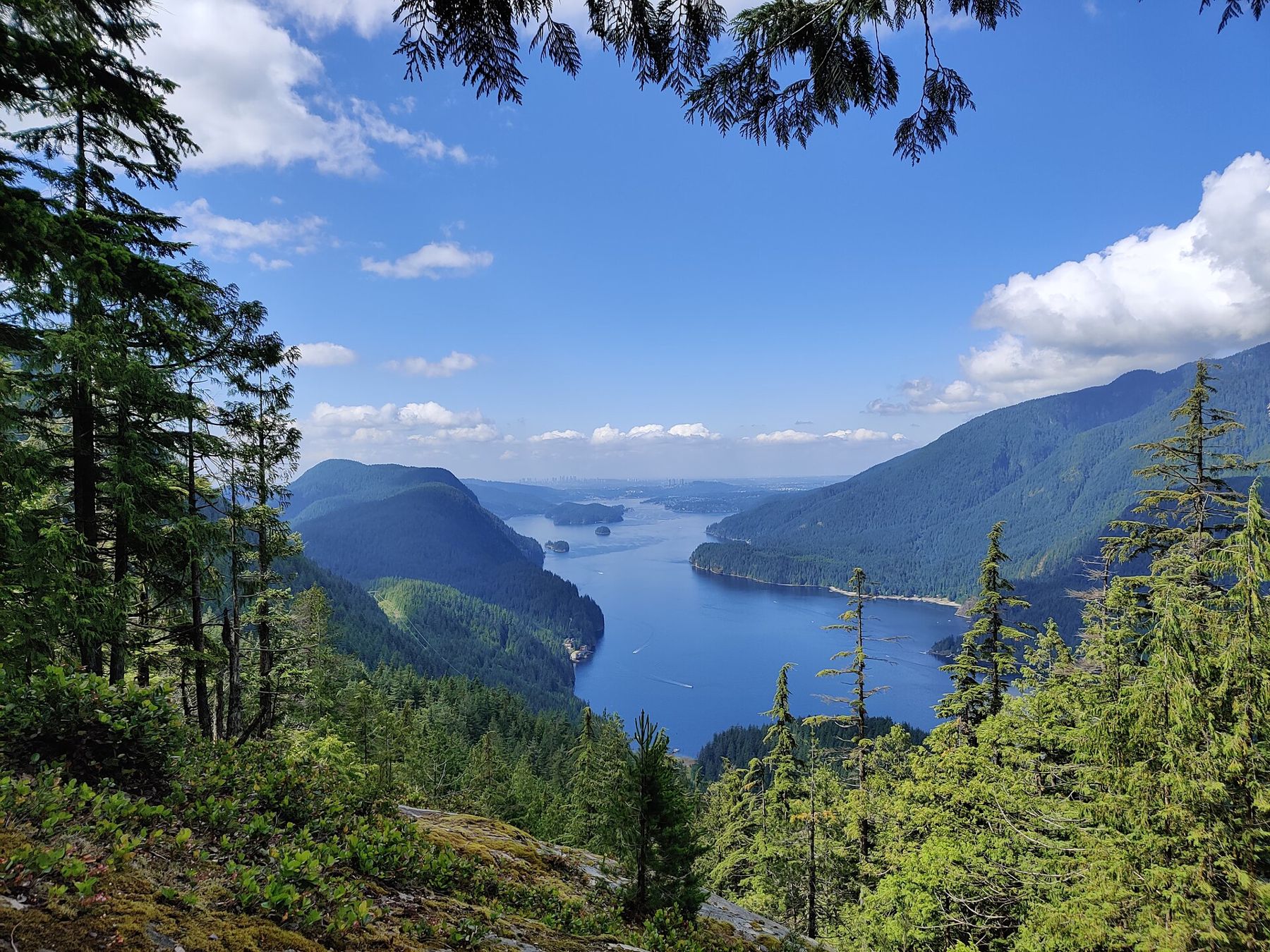
Indian Arm itself is a fjord carved by glaciers: long, narrow and deep, with mountains dropping straight into the water on both sides. It runs north for many kilometres, and from the village you only see its mouth. To see more, you either climb or paddle.
The climb to Quarry Rock
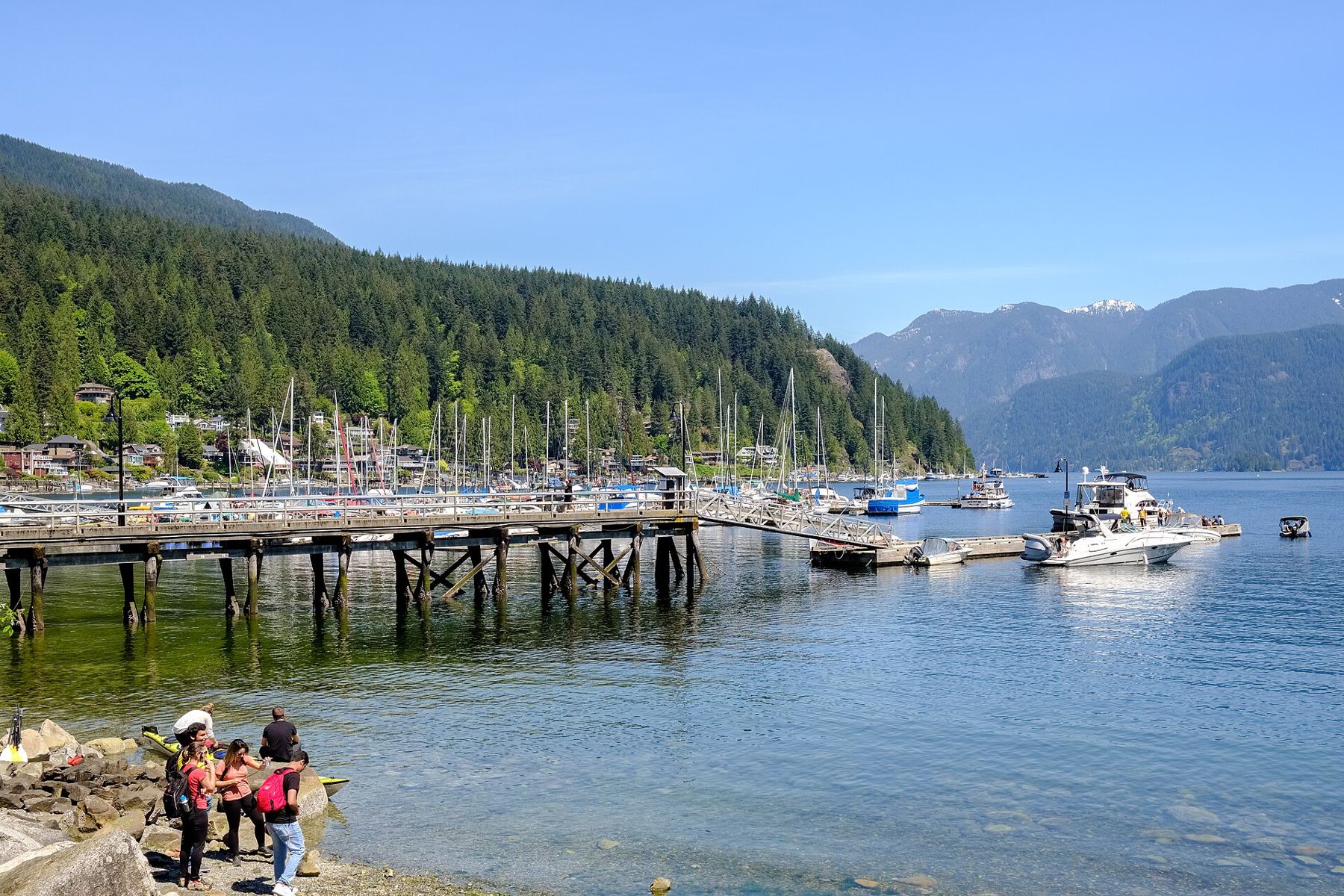
Quarry Rock is a bare granite outcrop on the hillside north of the village, reached by a short section of the long Baden-Powell Trail. The round trip is a few kilometres and takes most people somewhere around an hour to an hour and a half, plus however long you sit at the top. It is short, but it is not flat. The trail climbs through second-growth forest on rough steps, rocks and a web of tree roots, with a few short steep pitches.
- Wear shoes with real grip. Sandals and smooth soles are a bad idea on the roots.
- Carry water, even for a short hike, and pack your rubbish out.
- Dogs must be under control, and the district sets rules on leashes.
- The lookout has steep drops with no railings. Keep children close.
The reward is out of proportion to the effort. You come out of the trees onto a broad, sloping slab of rock, and the whole mouth of Indian Arm opens below you: the boats of the cove, the forested shore of Belcarra across the water, and the mountains folding away to the north.
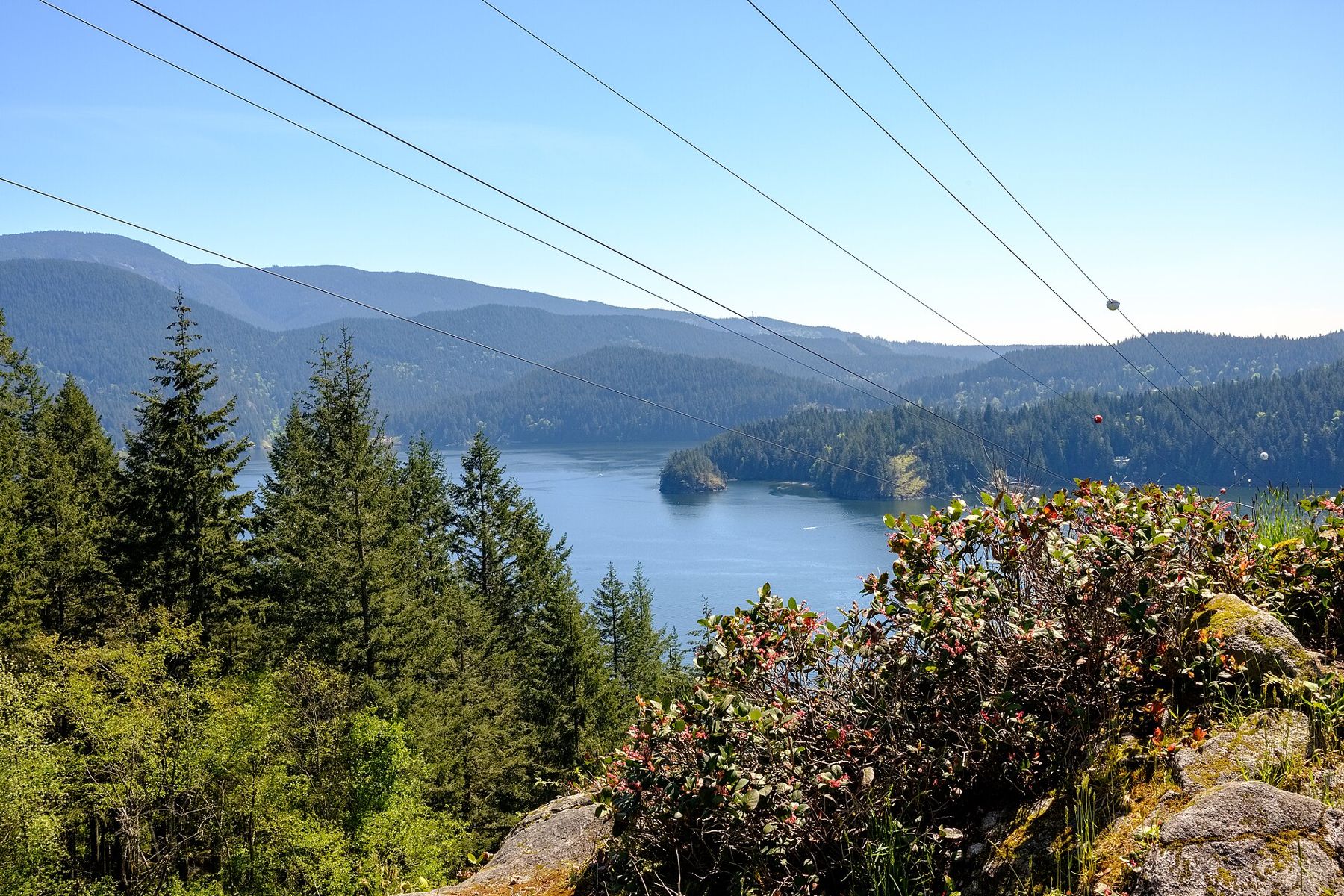
Sit for a while. Watch the boats crossing, the light moving on the water and the eagles riding the air above the trees.
It is the kind of view that usually takes a full day of hiking, and here it takes an hour. That is exactly why it is so busy, so the early start is worth it.
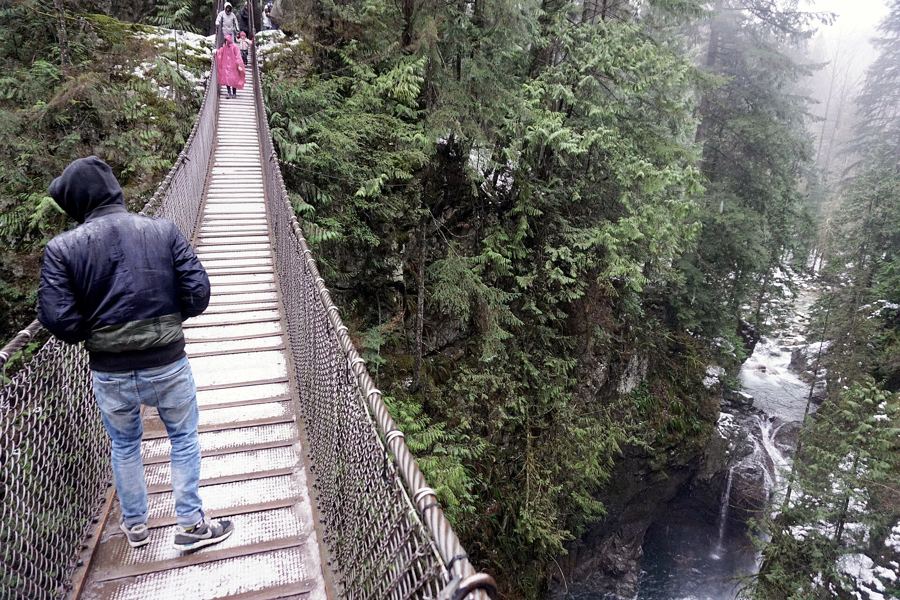 Same afternoon?Lynn Canyon's suspension bridge
On the water
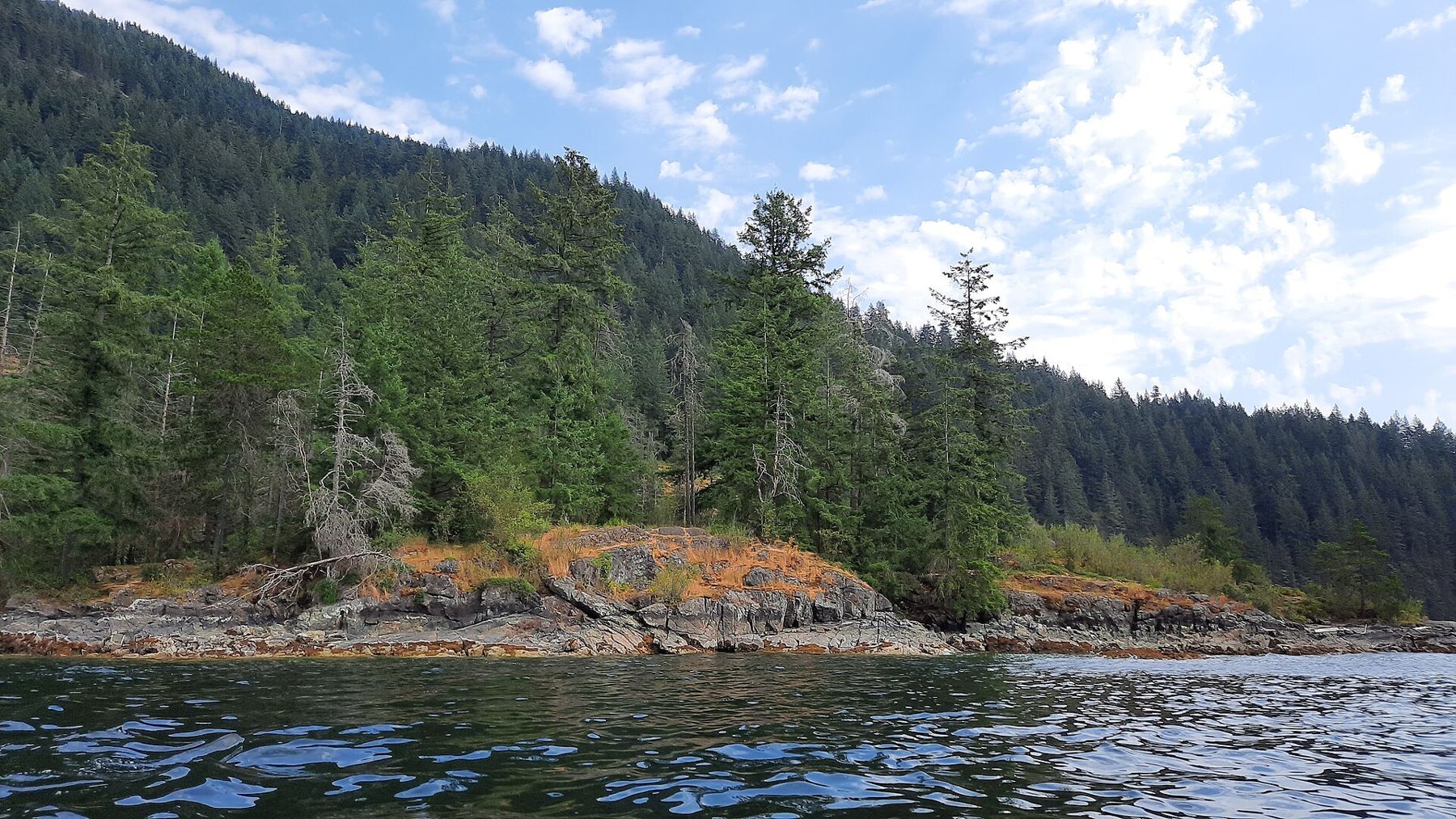
The cove is sheltered and usually calm, which makes it one of the best places near Vancouver to try kayaking or paddleboarding. Rental and lesson operators work from the waterfront in the warmer months, and you can paddle along the shore, cross to the small islands near the mouth of the arm, or head up the inlet if you have the time and skill.
A few things to know before you go out:
- The water is cold all year. Wear a life jacket and dress for a swim, not just for the air temperature.
- Wind often picks up in the afternoon, so morning is usually the calmest time to paddle.
- Boats use the same water. Stay visible and keep clear of the marina channels.
- Seals, herons and eagles are common; give wildlife space and do not approach seals hauled out on rocks.
Further up the arm the shores grow wilder, with waterfalls running down the cliffs and few buildings. Paddling that far is a full-day trip and needs experience; for most visitors, a couple of hours around the cove and the nearby islands is plenty.
The village and the shore
Not everyone comes to climb or paddle, and the village is pleasant on its own. A waterfront park runs along the head of the cove, with lawns, big shade trees and a strip of pebbly beach where you can sit and watch the boats come and go. Families spread out on the grass, and on warm days people wade at the water's edge, though the sea is cold enough to make that a short visit.
The main street is only a few blocks long, with places to eat, buy picnic supplies and get a coffee before the climb. A small public pier reaches out into the cove beside the marina, and it is a good spot for photos of the boats with the hills behind. Evenings are quieter once the day crowds leave, and on a clear summer night the light lingers late over the water.
If you have a little more time, the shoreline park on the road into the village is worth a stop. It has forest paths, a beach facing across the inlet and space for a picnic away from the busier village waterfront.
It is the kind of view that usually takes a full day of hiking, and here it takes an hour.
Getting there and parking
Parking is the hardest part of a Deep Cove day. The village lots and street spaces are limited, and on warm weekends they fill early in the morning. If you drive, arrive early or come on a weekday, and read the signs carefully, since rules and time limits are enforced.
Transit is the calmer choice. From downtown, ride a bus across the Second Narrows to Phibbs Exchange in North Vancouver, then take the connecting bus out along the shore to the village. The trip takes a while but drops you right by the water. The SkyTrain and buses guide covers the basics of fares and tapping.
Rain or shine
Deep Cove is a dry-day trip. The climb and the paddle both depend on the weather, and the view up the arm is the reason to come. In light drizzle, the forest walk is still pleasant if you take it slowly, and the village and the waterfront park are good for an hour or two. In heavy rain, save it for another day.
If you are building a North Shore day, pair the cove with Lynn Canyon's suspension bridge or, on a clear day, the view from Grouse Mountain. For a bigger mountain outing further afield, the drive up to Squamish and the Chief is the natural next step. And if the weather turns, head back across the harbour on the SeaBus from Lonsdale Quay and spend the afternoon indoors downtown.
Top picture by Xicotencatl