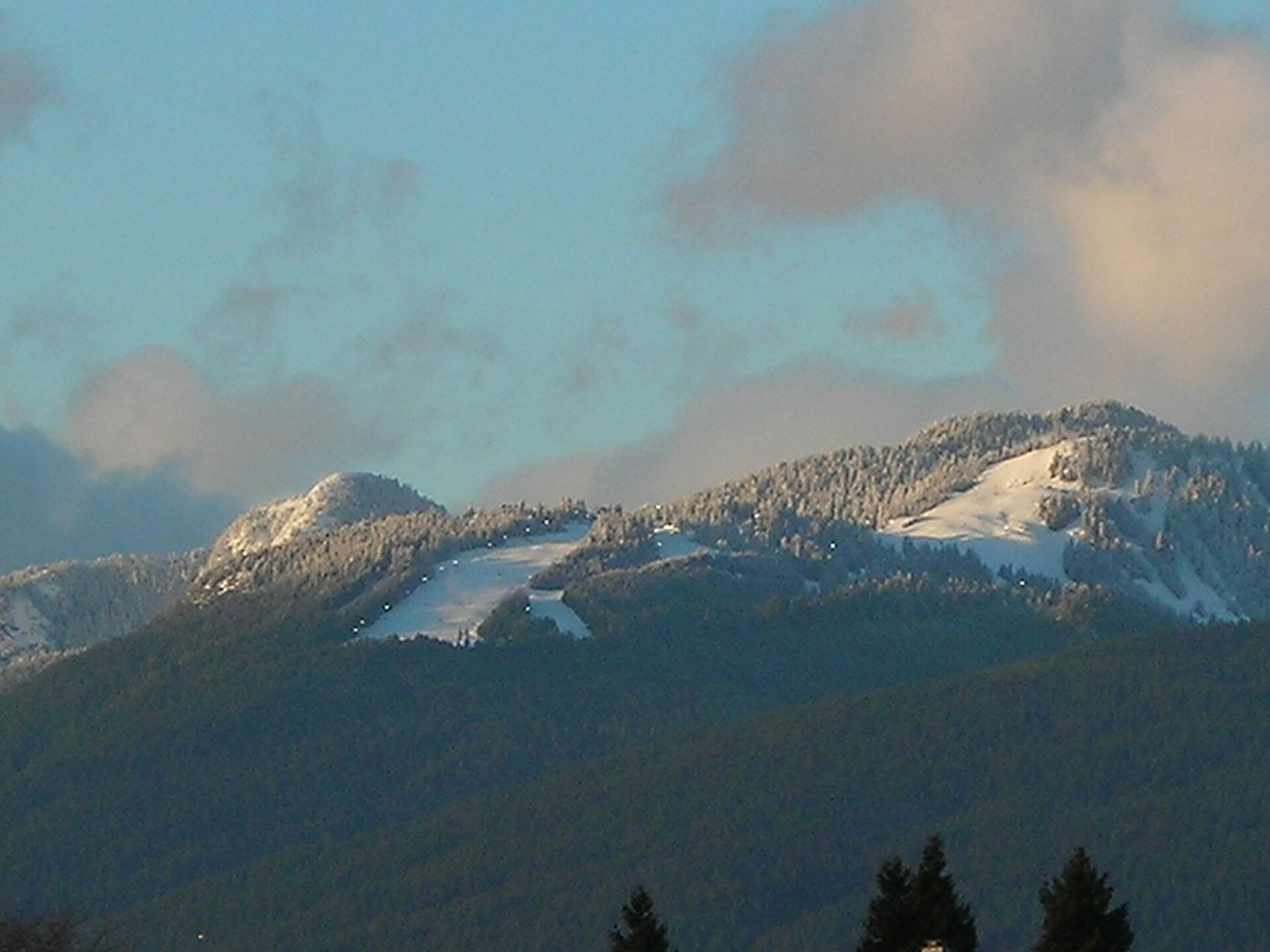
Grouse Mountain rises straight up behind North Vancouver, close enough to downtown that you can see its lit ski runs from the city on a winter night. On the right day it is the best viewpoint in the region: the downtown towers, Stanley Park, the harbour, the Fraser delta and, far to the west, the hills of Vancouver Island. On the wrong day you climb into a cloud and see nothing at all. Timing is everything here.
The North Shore mountains are within the lands of the Squamish and Tsleil-Waututh Nations, and these slopes were travelled and named by them long before any trail or gondola. Keep that in mind as you look out from the top.
Read the weather first
Vancouver's weather often looks different at sea level and at the summit. A grey, drizzly morning downtown can mean a thick cloud cap on the mountain, while a bright day in the city sometimes still hides the peak in mist. Before you set out, look up from the city: if you can see the ridgeline clearly, you are probably in luck. Summit webcams help too.
The best odds come in summer and early autumn, during the region's long dry spell. Clear winter days after a snowfall are spectacular as well, though the hiking trails close for the season and the summit turns into a small ski area.
The Grouse Grind, in general terms
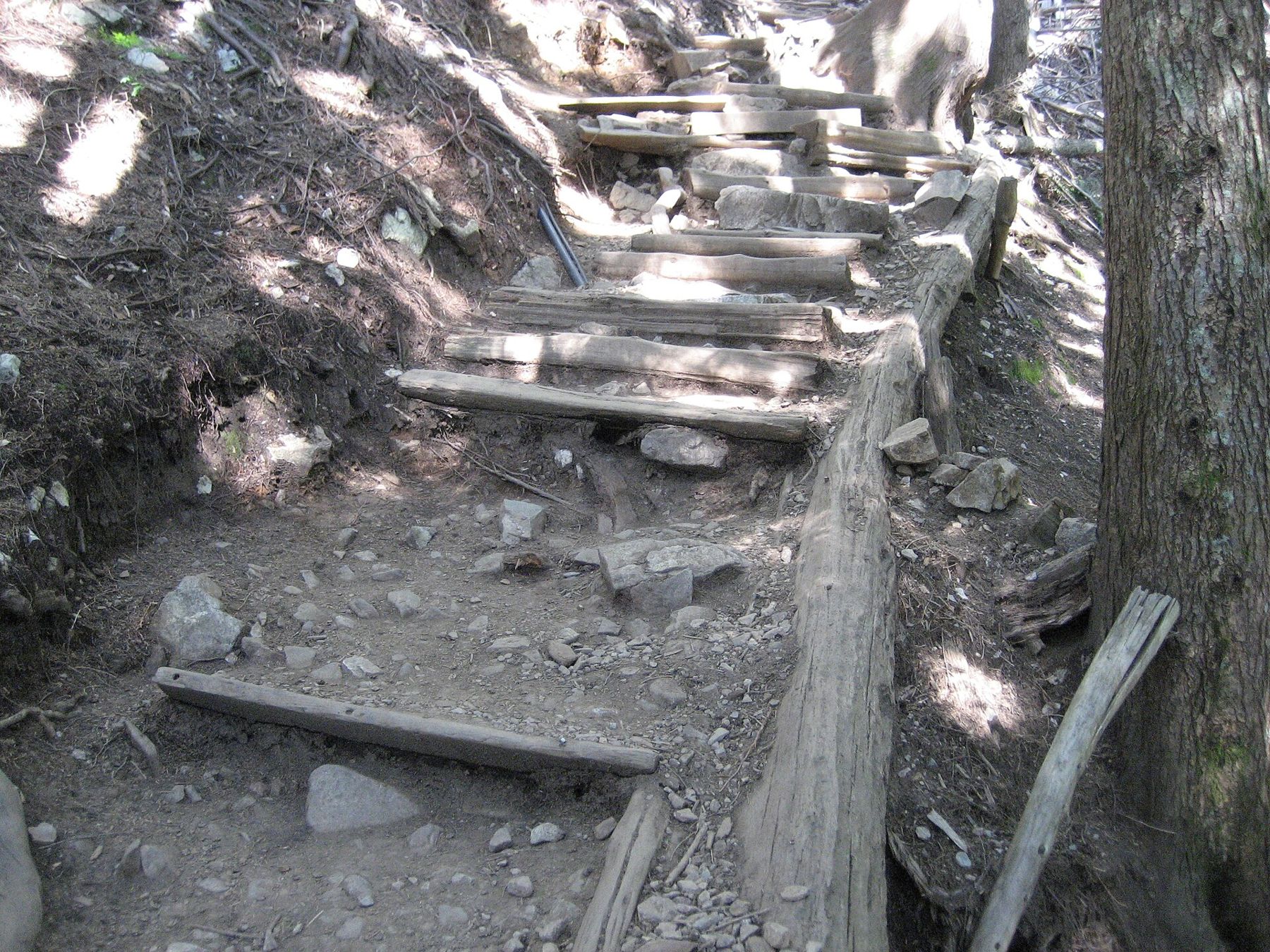
The Grouse Grind is the climb everyone talks about. It is a steep trail of a little under three kilometres that gains roughly 850 metres of elevation, much of it on rough steps of rock, roots and timber. It goes more or less straight up the face of the mountain. There is no gentle stretch to catch your breath, and it is one-way: uphill only.
- Fit hikers often take an hour or a little more; most people take closer to two, and first-timers often longer.
- The trail usually opens in late spring once snow clears and closes in autumn.
- Carry water. There is nowhere to refill on the way.
- Start early on hot days, since the upper section can be stuffy even in shade.
- Plan to ride the gondola down, which carries a fee.
The Grind is not a casual walk. If you have heart or knee concerns, or you are new to steep hiking, take the gondola up and enjoy the summit trails instead. Search and rescue teams are called to the North Shore mountains often, usually for hikers who underestimated the terrain.
The gondola and the summit
The gondola climbs from the base area to the summit plateau in a few minutes, and the ride is half the point: the city falls away beneath you as you rise over the forest. At the top, short trails and viewpoints lead around the plateau, and in summer there are wildlife displays and other activities. In winter the same ground is given over to skiing, snowboarding and snowshoeing.
The gondola sometimes pauses for maintenance or high winds.
 Same afternoon?Lynn Canyon's suspension bridge
What you see from the top
On a clear day the view runs south over Burrard Inlet to downtown and the green block of Stanley Park, then on across the city to the Fraser delta and the flat farmland beyond. To the south-east, a snowy volcanic peak floats above the haze across the border. West, the Strait of Georgia shines, with the hills of Vancouver Island behind. Late in the afternoon, the light comes in low and gold off the water.
Bring a warm layer even in August. The summit sits more than a kilometre above the sea, and the wind can be cool when downtown is warm.
Getting there without a car
From downtown, cross the harbour on the SeaBus to Lonsdale Quay, then take a bus up to the base of the mountain; the ride climbs through North Vancouver's residential streets. The SeaBus and Lonsdale Quay are worth their own slow visit on the way back. For the basics of tapping on and zones, see SkyTrain and buses, the easy way.
Parking at the base is paid and fills on busy summer weekends, so transit is the simpler choice. If you are hiking, leave enough time for the bus back down too; queues for the gondola and the bus can both build on sunny afternoons, and the last part of the day goes faster than you expect when you are tired.
Pairing it with the rest of the North Shore
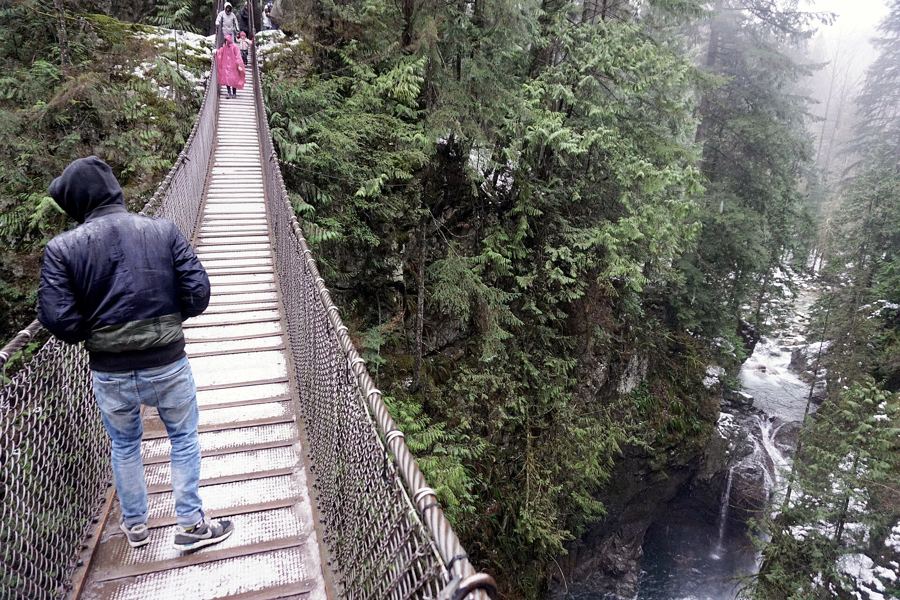
Grouse sits in a run of North Shore spots that all reward a dry day. Lynn Canyon's suspension bridge is a short drive or bus trip east and makes a good afternoon after a morning climb. Further east again, the short climb to Quarry Rock above Deep Cove gives a quieter view up Indian Arm. If the cloud stays down all day, head back across the water and spend the afternoon on the seawall in Stanley Park instead, where the weather matters far less.
A clear-day checklist
- Check trail status and gondola hours the same morning.
- Pack water, a snack, a warm layer and a rain shell.
- Wear shoes with grip; the steps are uneven and often damp.
- Leave enough daylight for the summit and the ride down.
Top picture by Exien